Poverty-stricken Children’s Obesity
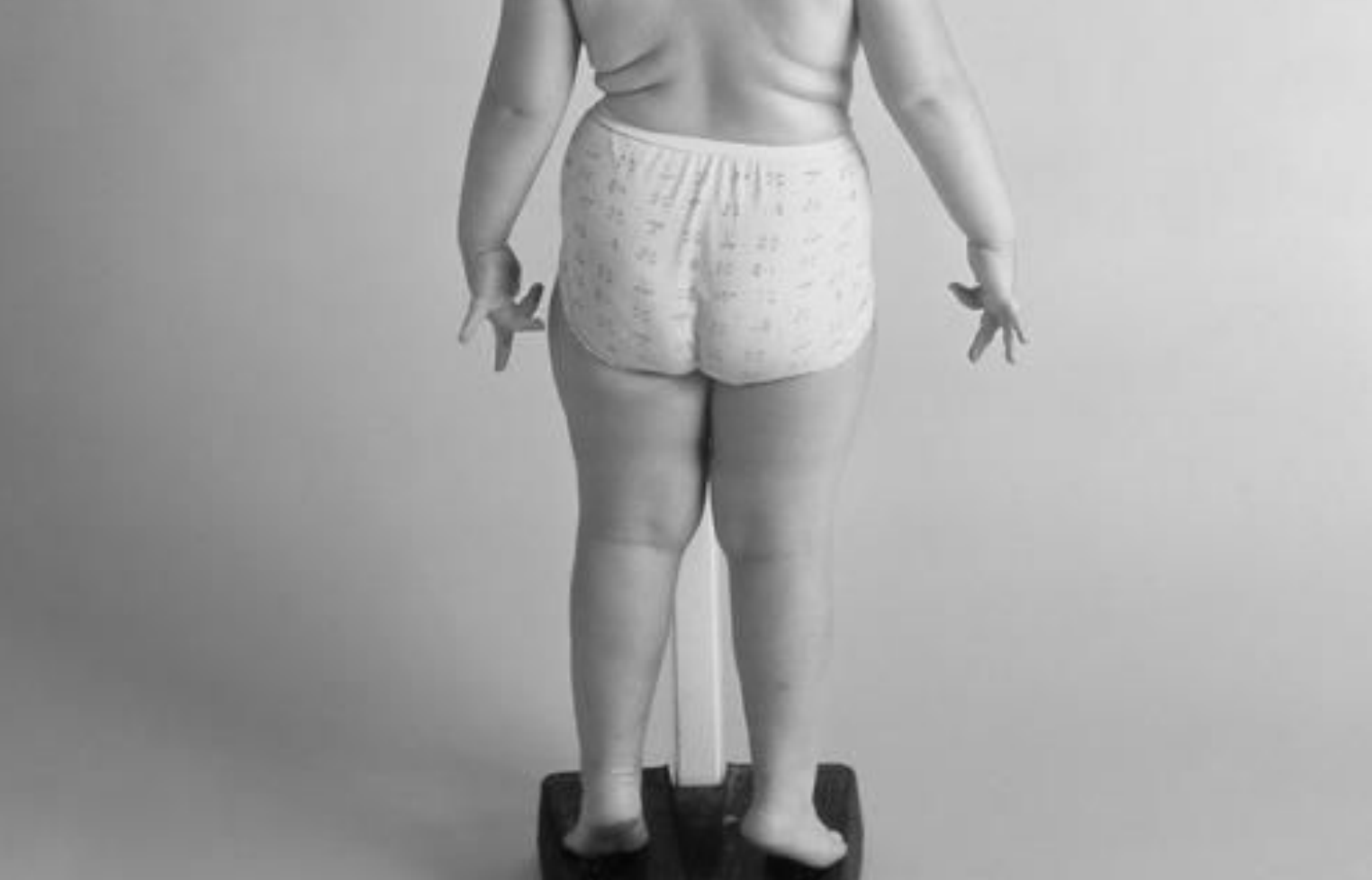
How might healthy food become desirable and accessible to children when poverty shapes both choice and opportunity?
Nutrinode responds to childhood obesity as a structural issue rather than an individual failure. The project connects food access, time, education, stigma and family resources, then turns those relationships into a playful service and food-printing prototype through which children can compose healthier meals.
Childhood obesity is not an individual failure; it is produced by access, time, price, policy and environment.
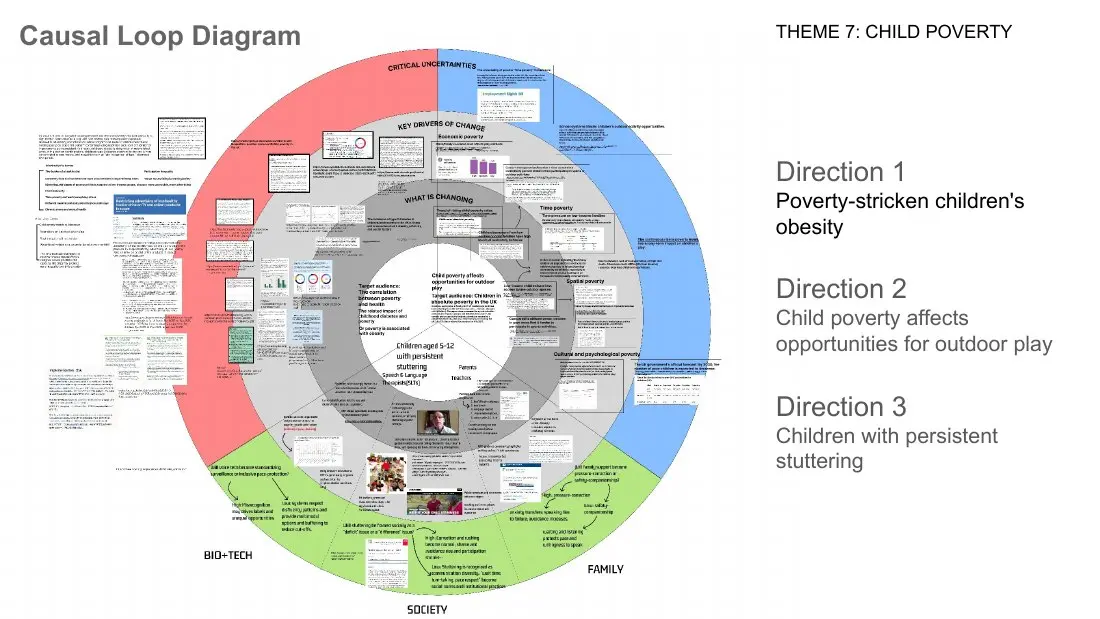
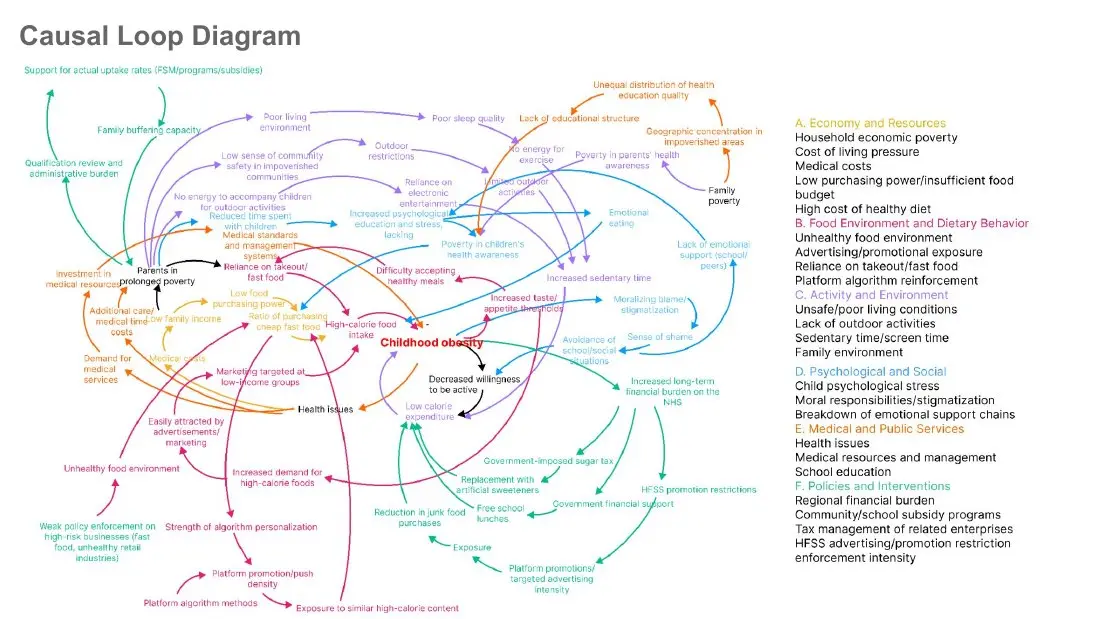
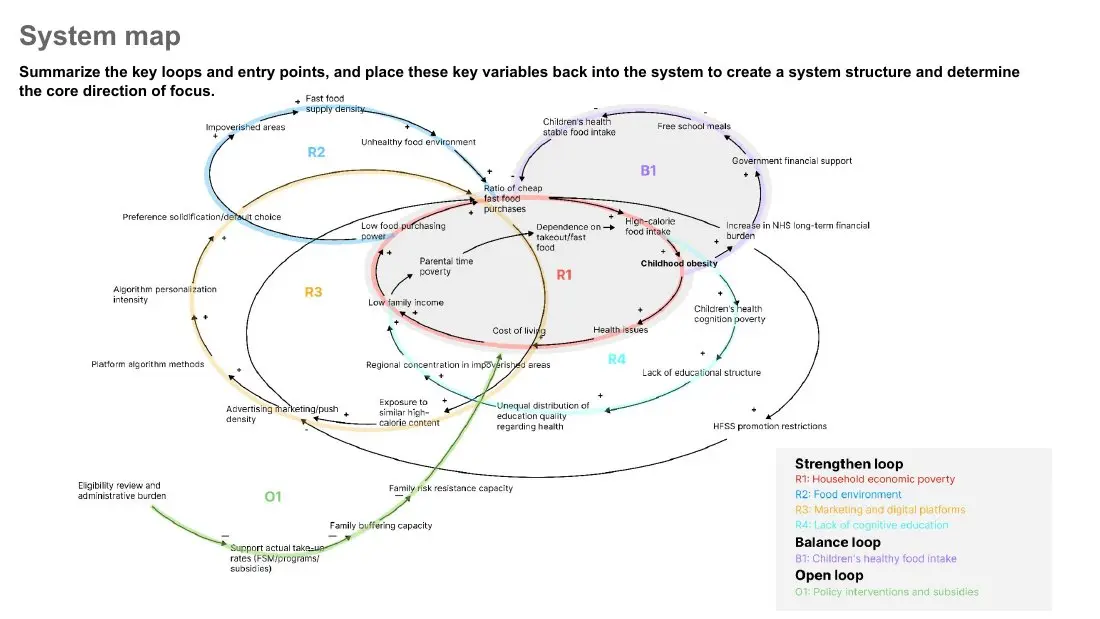
Children are more likely to engage with healthy food when the system offers authorship, play and dignity—not another layer of judgement.
Different food futures expose where intervention could widen—or reduce—health inequality.
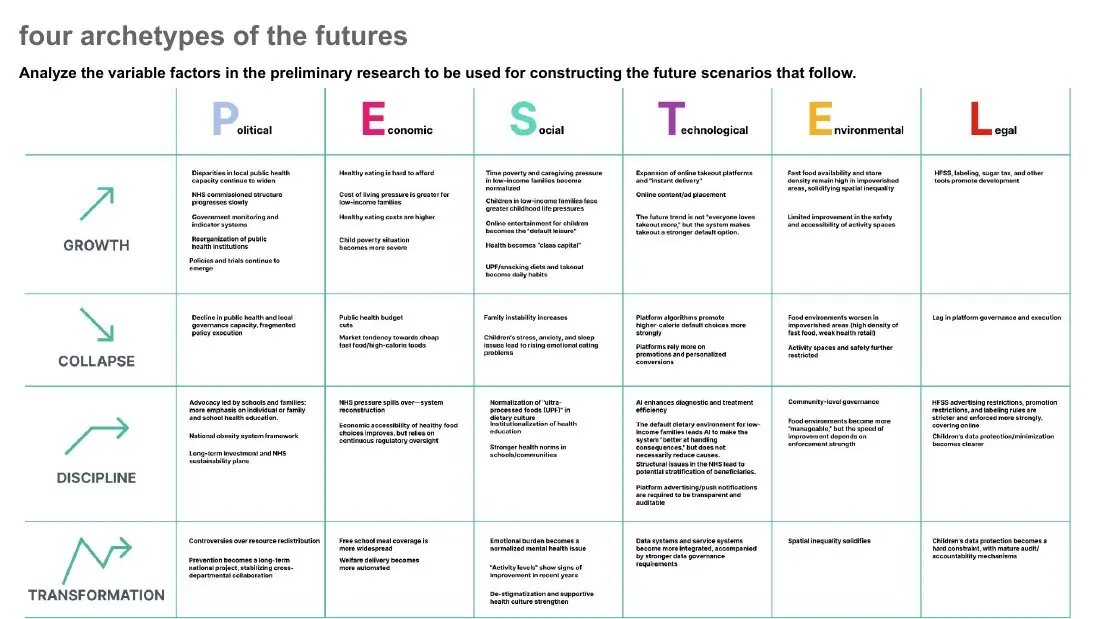
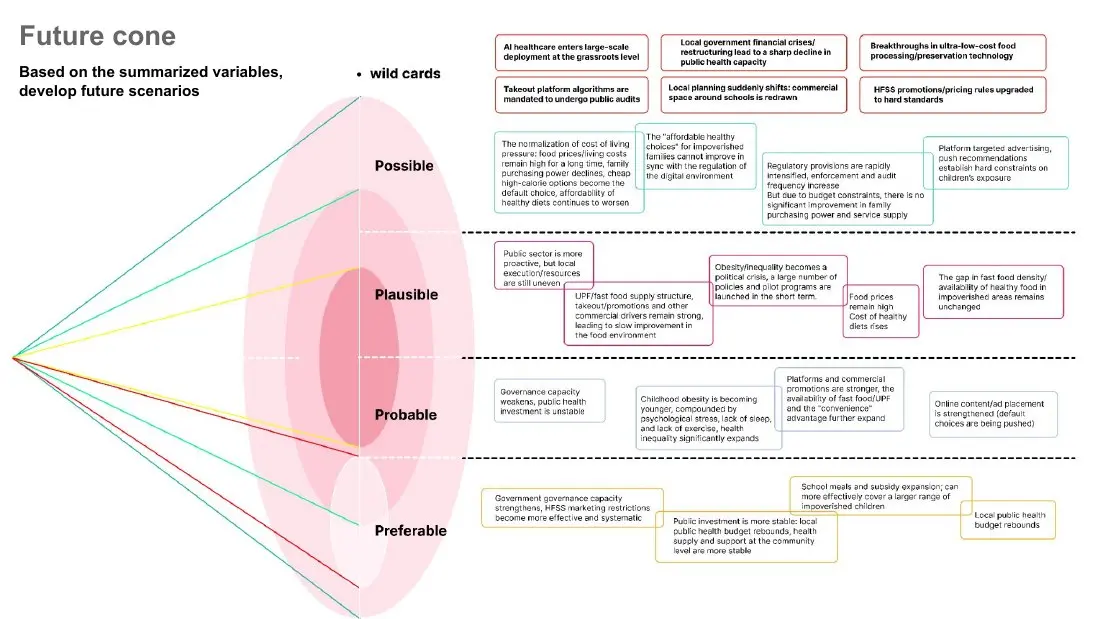
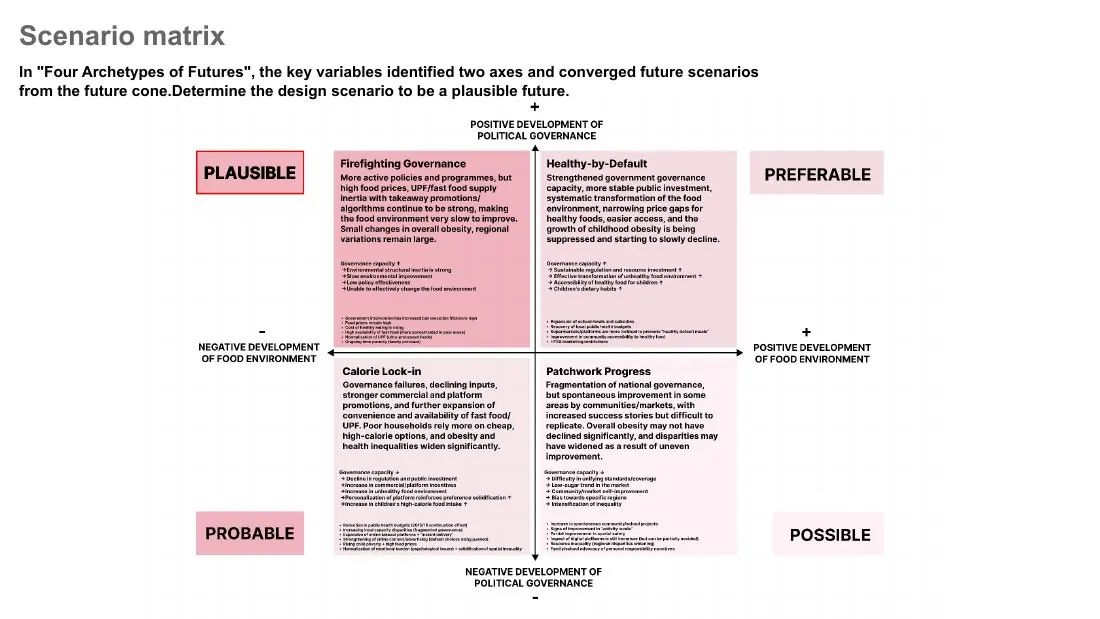
Make healthy food desirable, accessible and playful—without adding another layer of judgement.
The team moved from structural analysis toward interventions in food retail, personalised nutrition, community provision and children’s participation.
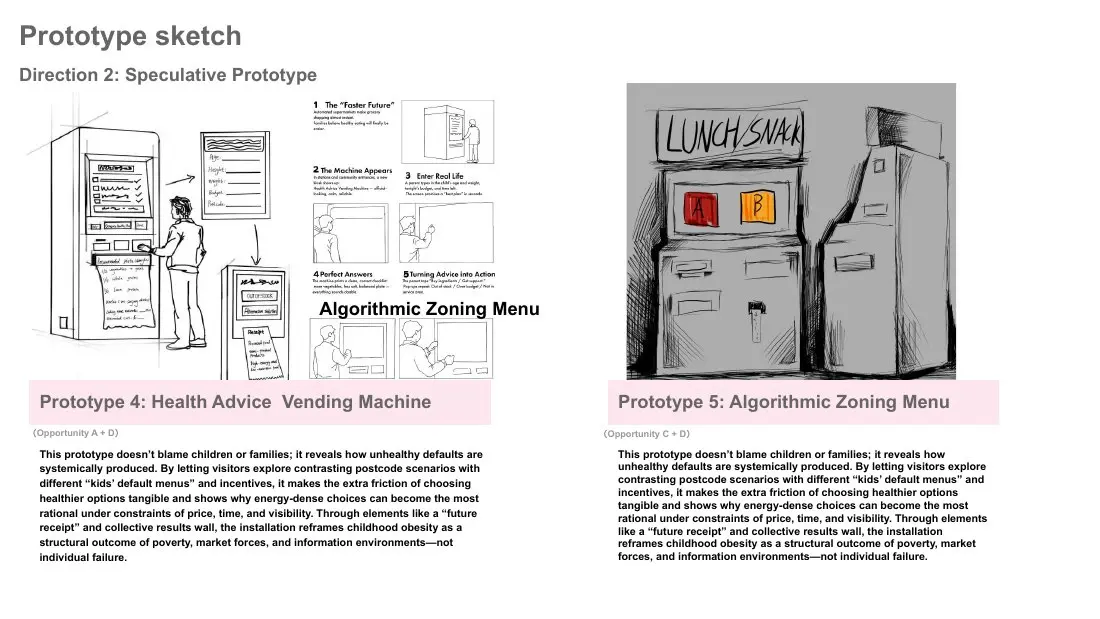
Five early concepts tested different leverage points before the team selected Nutrinode.
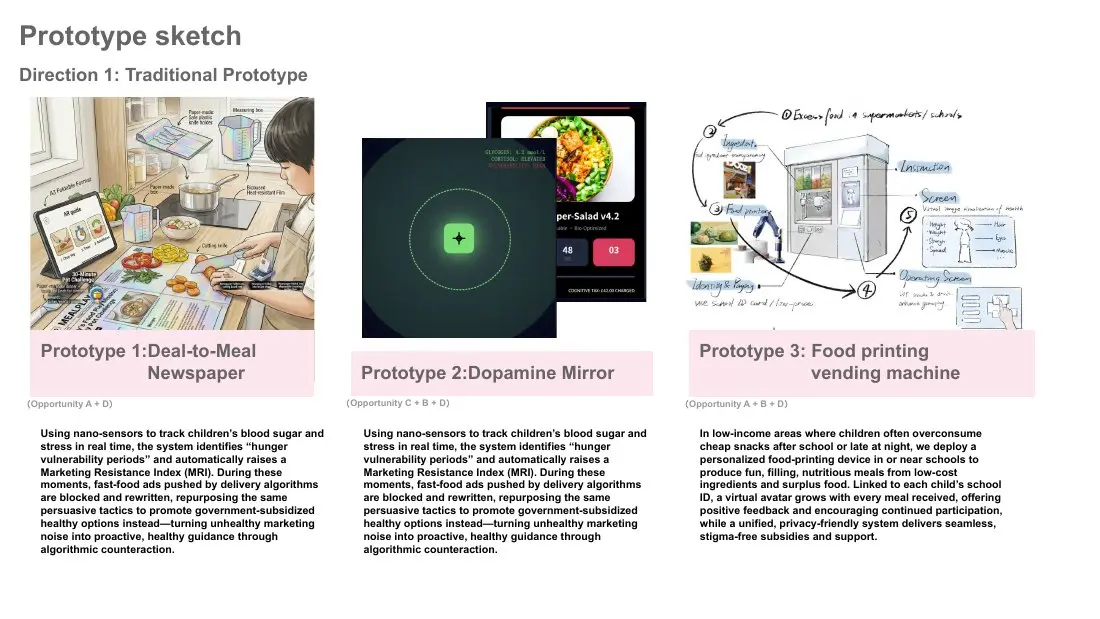
Nutrinode
A retail food-printing service that combines healthy ingredients, personalised forms and child-led interaction. Instead of prescribing behaviour, it makes nutrition visible, playful and authored by the child.
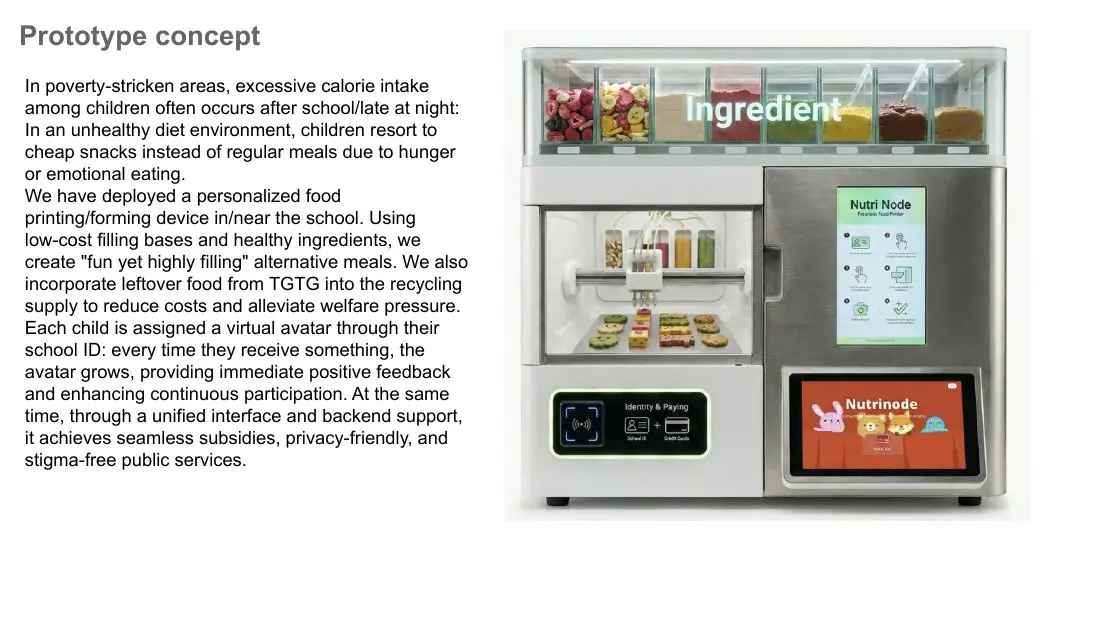
One service, developed across machine, interface and delivery system.
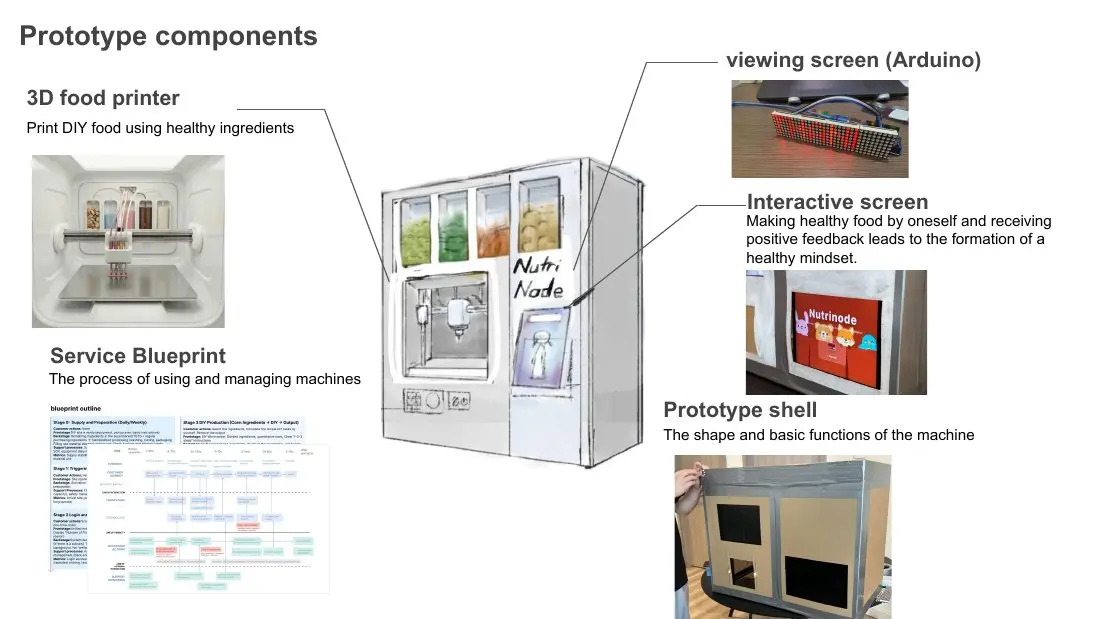
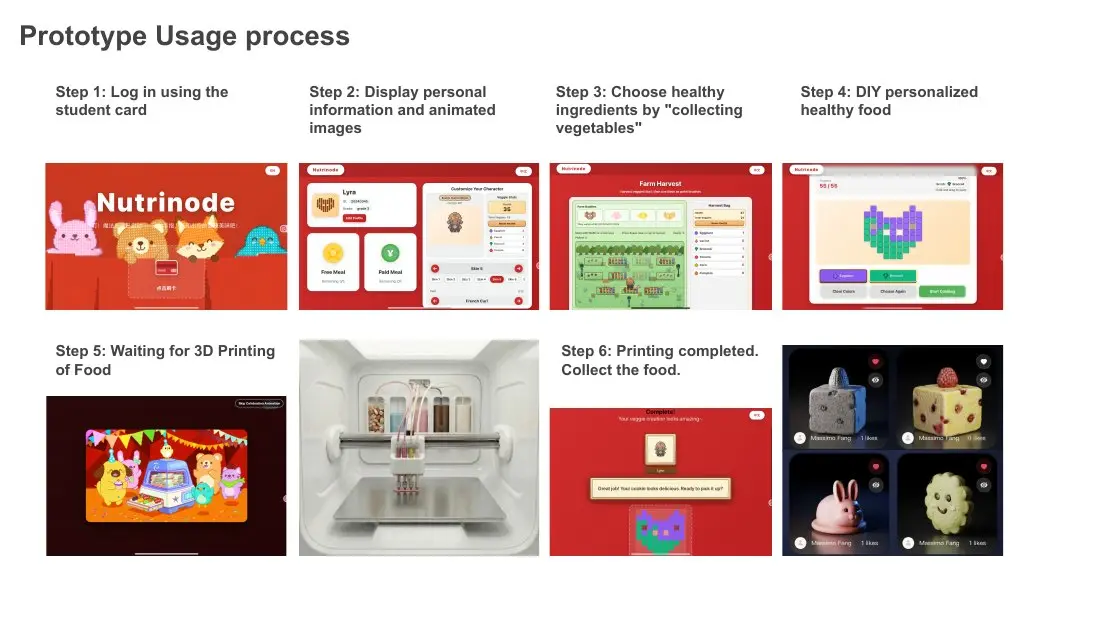
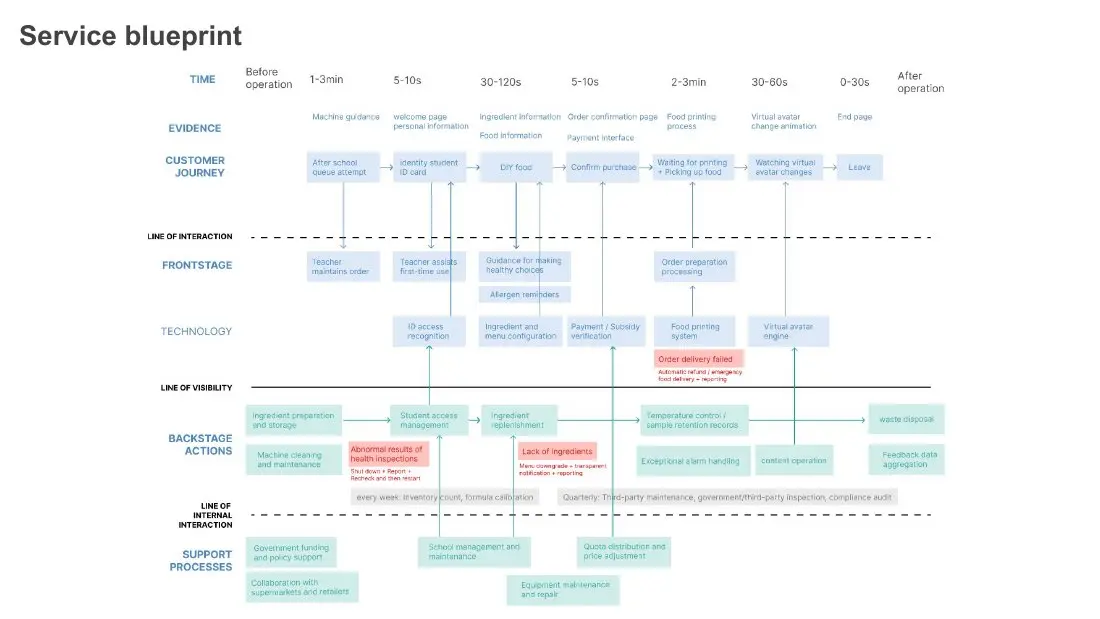
Nutrinode combines a food-printing machine prototype, character-based interface and supporting service system for accessible personalised meals.
FormatFive-person collaboration · 2025—2026
ContributionFive-person collaboration. I contributed research synthesis, concept development, Arduino prototyping, physical fabrication and the translation of the service into a tangible machine experience.
MethodsSystems mapping · Futures research · Service design · Arduino · Physical prototyping · Interface design
See the complete project,
in its original sequence.
The webpage foregrounds the project’s argument. The PDF preserves the full research, visual development and documentation.