Visibility is social, not only visual
A visible prosthesis changes the atmosphere of an encounter: how people look, respond and form impressions can make visibility socially heavy.
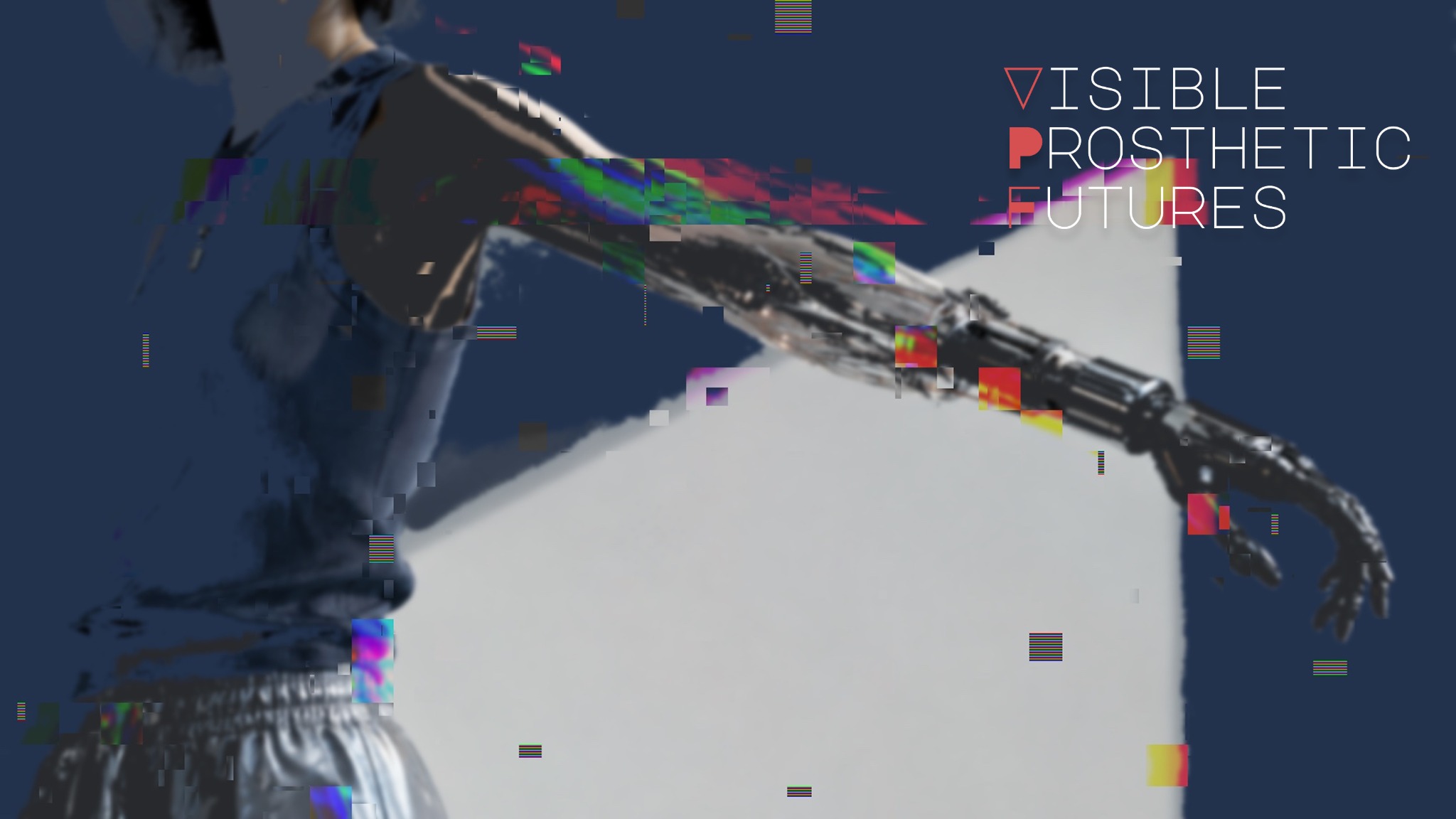
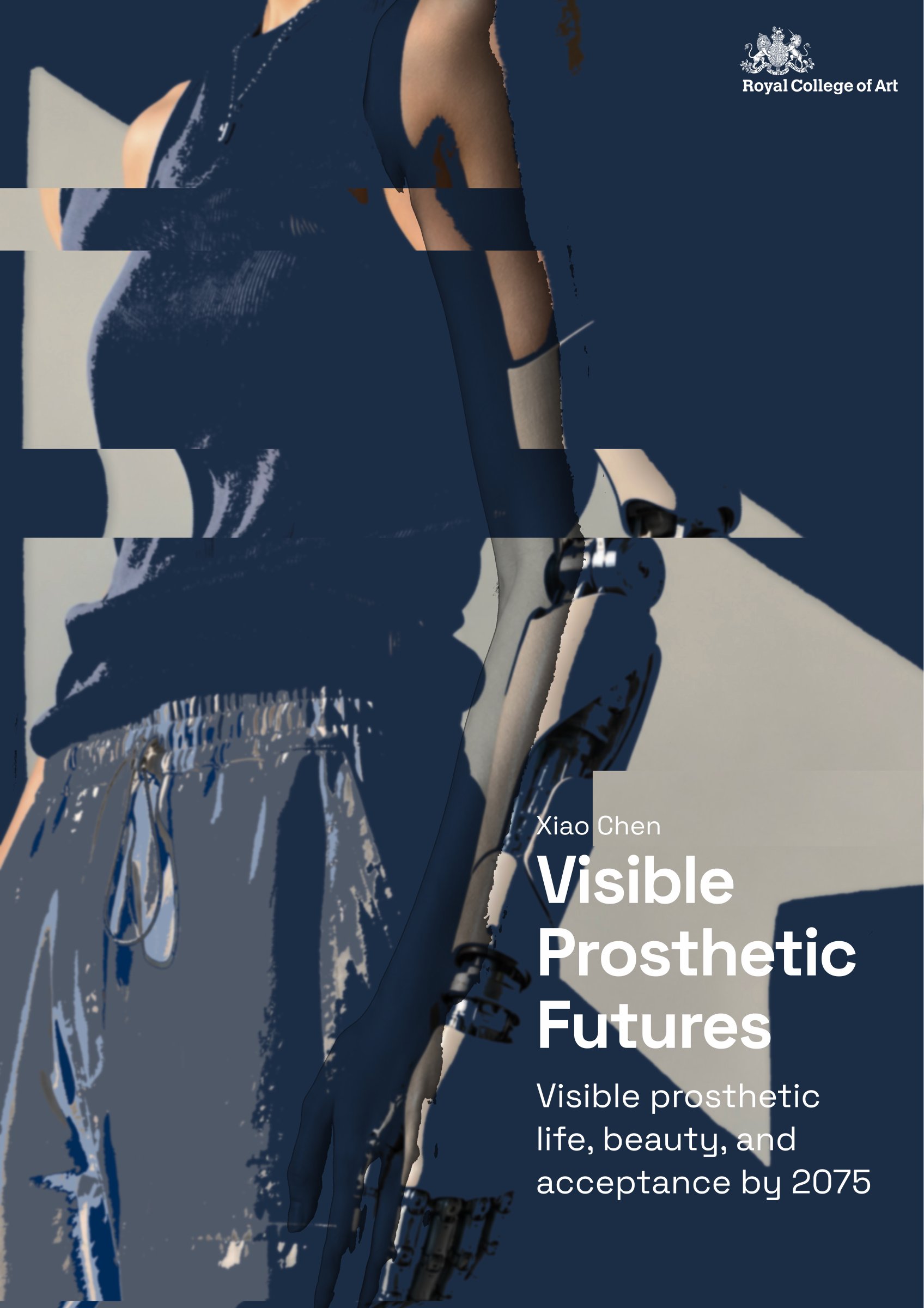
Visible prosthetic life, beauty and acceptance by 2075
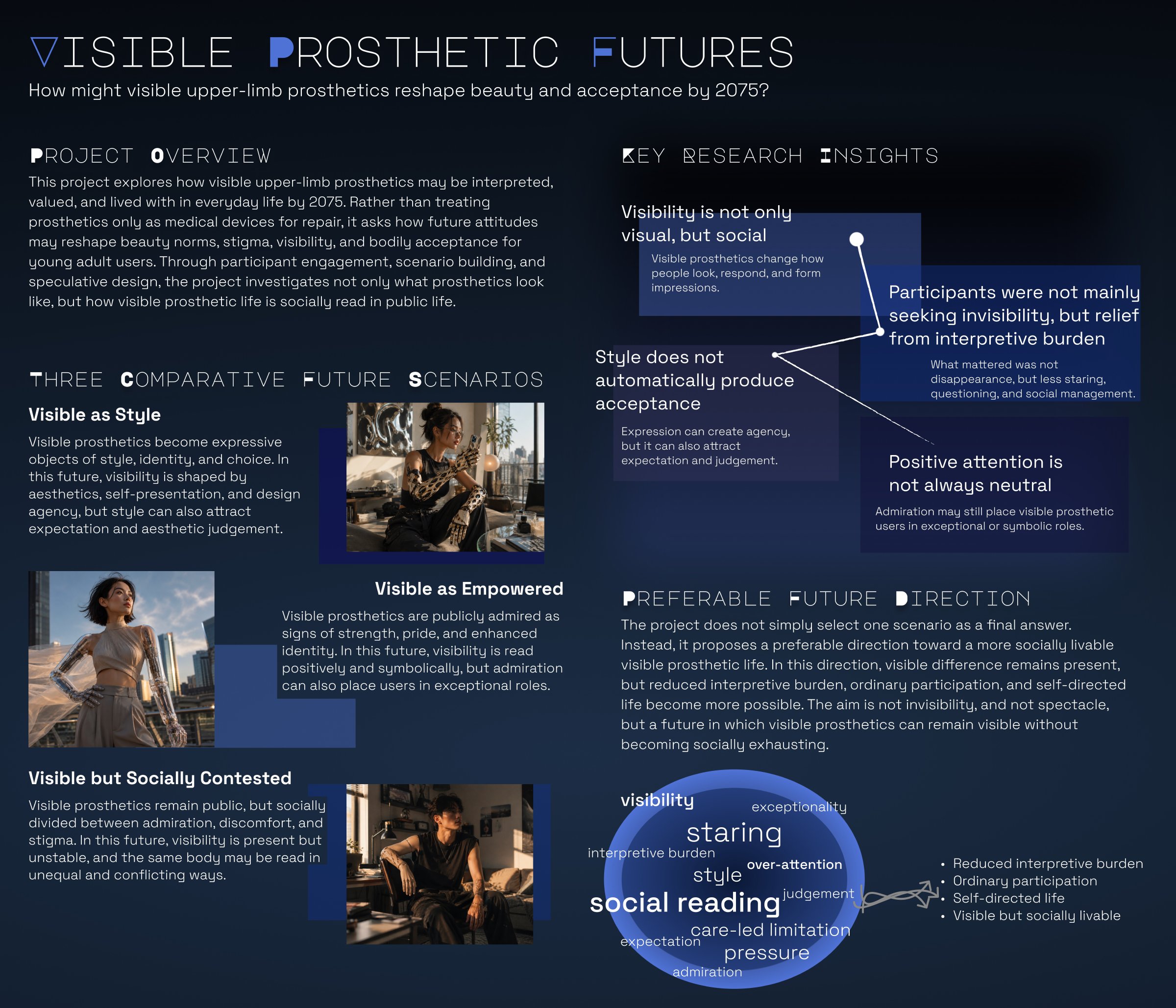
This independent research project investigates how visible upper-limb prosthetics may be lived with, interpreted and socially accepted in everyday life by 2075. It moves beyond the familiar medical framework of repair to examine identity, visibility, body politics and belonging.
The project does not predict a single future or design a new medical device. Instead, it makes different social conditions tangible so that prosthetic users, families, practitioners, designers and wider publics can compare, question and discuss them.
Disability studies, body politics, posthumanism and precedents reframed prosthetics as social and cultural objects—not only assistive technologies.
A visual questionnaire and interviews engaged 11 prosthetic users, family members, artists and prosthetic designers.
Responses were translated from excerpts into repeated tensions: gaze, comfort, expression, care, participation and interpretive burden.
Personas, scenario cards and full-scale speculative forms made each possible social future visible and discussable.
A visible prosthesis changes the atmosphere of an encounter: how people look, respond and form impressions can make visibility socially heavy.
Participants wanted relief from staring, questioning and the work of managing other people’s reactions—not the disappearance of visible difference.
Expression can create agency, yet it can also redirect attention and introduce new aesthetic expectations and judgement.
Admiration may still cast prosthetic users as exceptional, symbolic or permanently inspirational rather than ordinary.
“The preference is not for concealment, but for prosthetic visibility without social cost.”
Visible difference remains present.
Ordinary life becomes more possible.
The scenarios are not predictions. Each isolates a tension found in participant research and lets us ask what that condition might feel like in everyday life.
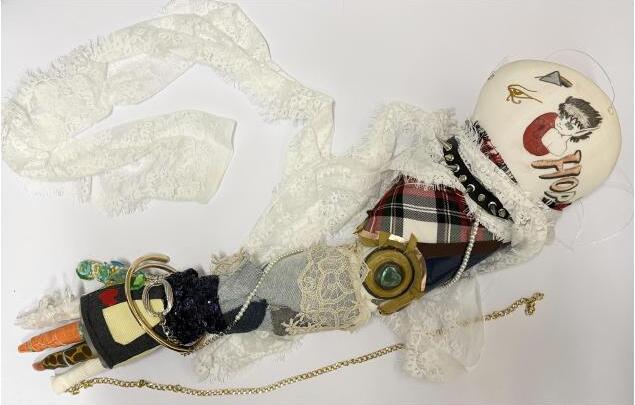
Visible prosthetics become expressive objects of taste, identity and choice. Aesthetic agency grows—but so do expectations about how a prosthetic body should look and perform.
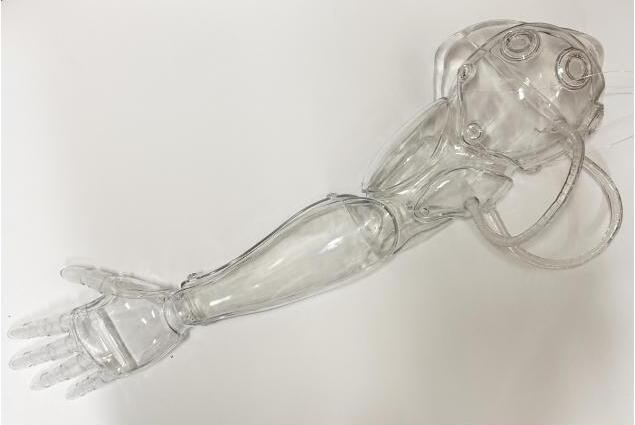
The prosthetic is admired as a sign of confidence, strength and pride. Recognition is positive, yet the user can become trapped in an exceptional or inspirational role.
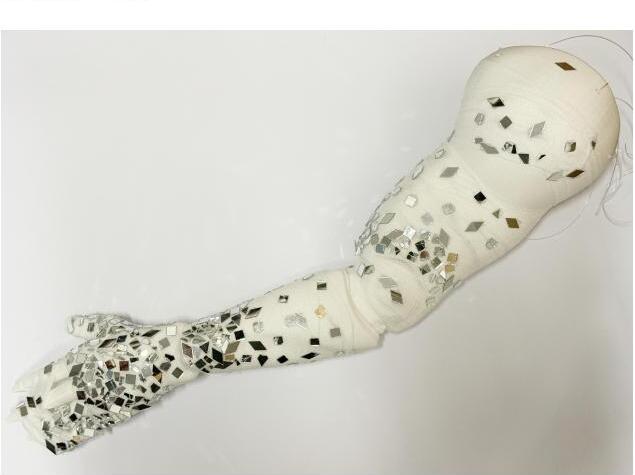
Visible prosthetics are common in public, but their social reading remains unstable—moving between curiosity, admiration, discomfort and stigma.
Not invisible.
Not spectacle.
The final installation translated abstract questions about gaze, judgement and participation into objects, images and conversations.
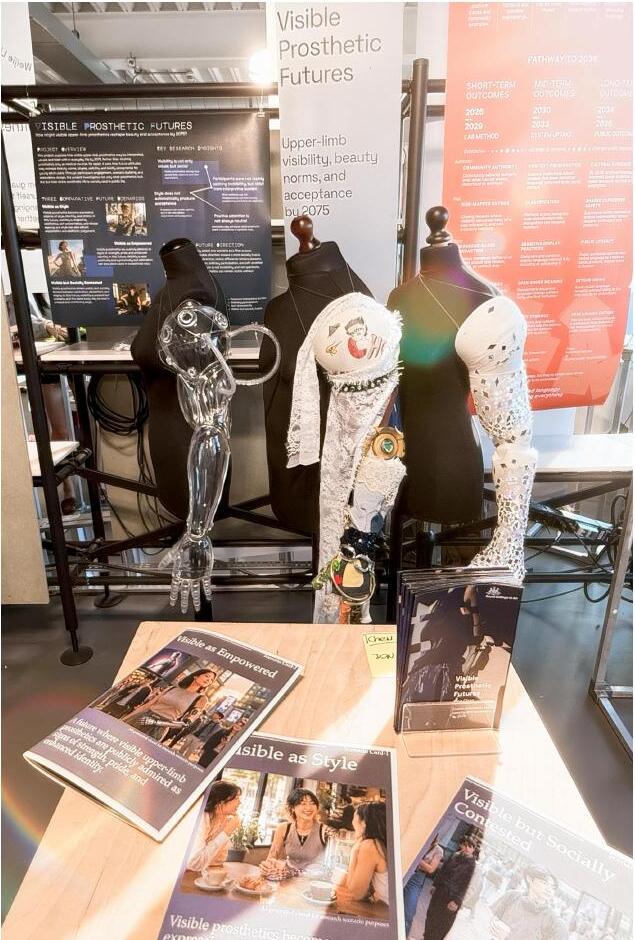
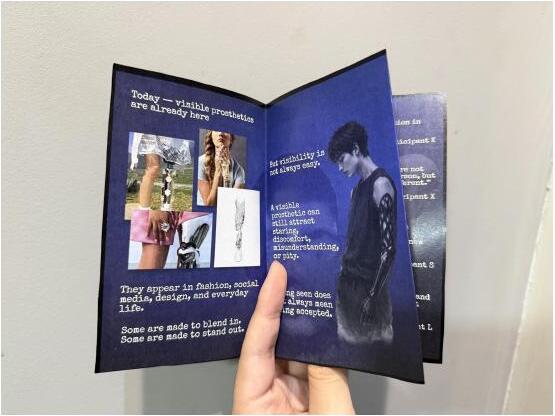
Surface over-attention, interpretive burden and the limits of admiration as acceptance.
Use scenarios in exhibitions, education, clinics and workshops to support stakeholder dialogue.
Help visible prosthetic bodies be understood as part of ordinary bodily diversity—not deficiency or spectacle.
Role Independent researcher and designer
Programme MDes Design Futures, Royal College of Art
Methods Research, interviews, coding, futures scenarios, material prototyping, visual communication
Outputs Three full-scale forms, scenario cards, booklet, posters and exhibition system
The webpage foregrounds the project’s argument. The PDF preserves the full research, visual development and documentation.