Faith as lived structure
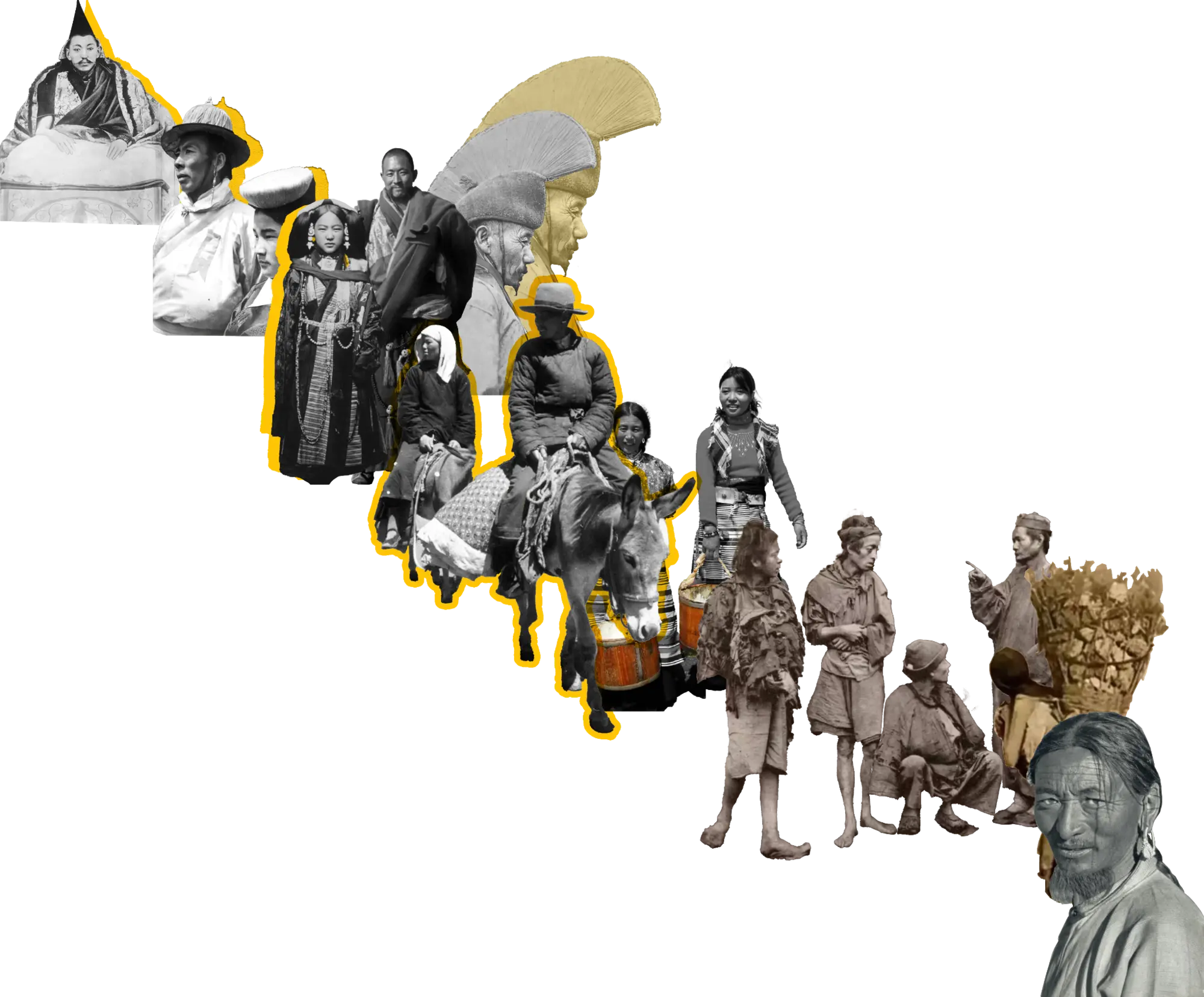
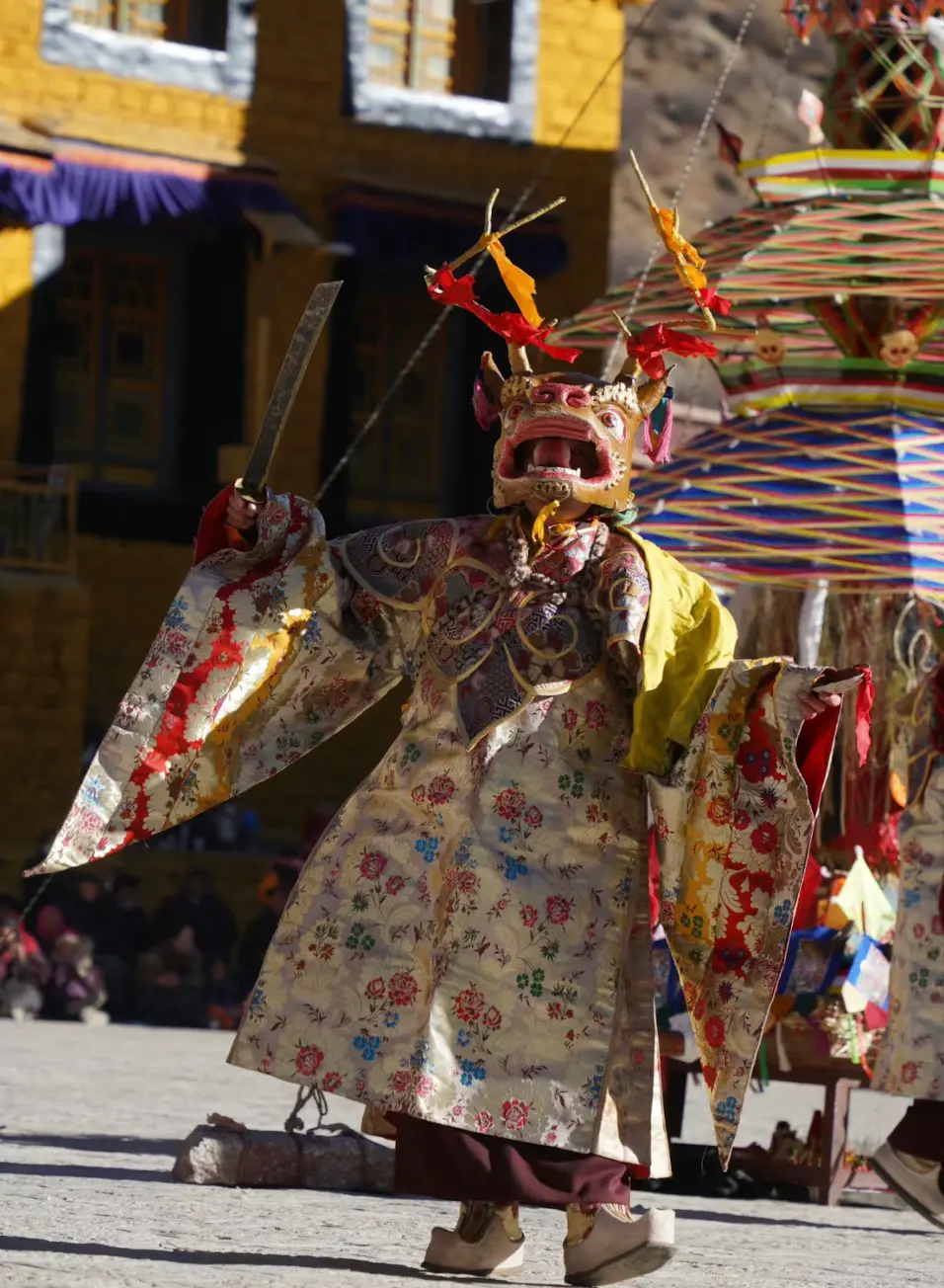
Field observation showed that belief was embedded in festivals, class history, family life and public space—not simply held as a private opinion.
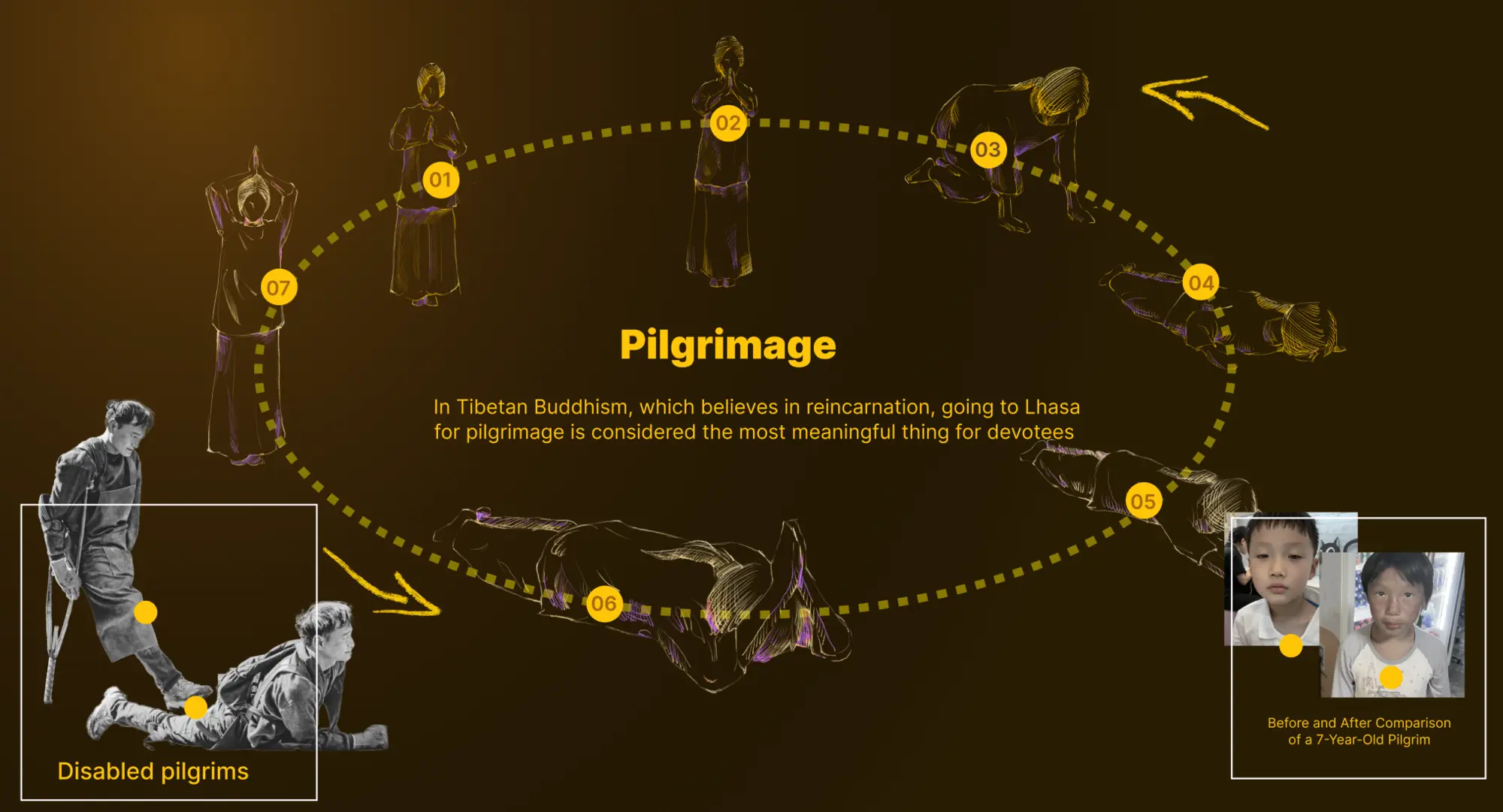
Coexistence of Beliefs began with my volunteer-teaching experience in Tibet, where faith appeared not as an isolated doctrine but as something carried through bodies, landscapes and everyday routines. I focused on pilgrimage and prostration: repeated acts in which devotion, social history, endurance and physical pain coexist. The project asks viewers to consider where spiritual discipline ends and internalised harm begins.
Independent project. I conducted the field photography and cultural research, traced the relationship between religious symbols and the body, developed the installation concept and interaction, and used TouchDesigner and Arduino only as the technical layer that made the conceptual relationship perceptible.
Field observation showed that belief was embedded in festivals, class history, family life and public space—not simply held as a private opinion.
The seven-stage movement of prostration made belief visible as a repeated bodily practice. Its physical intensity revealed the closeness of devotion, endurance and harm.
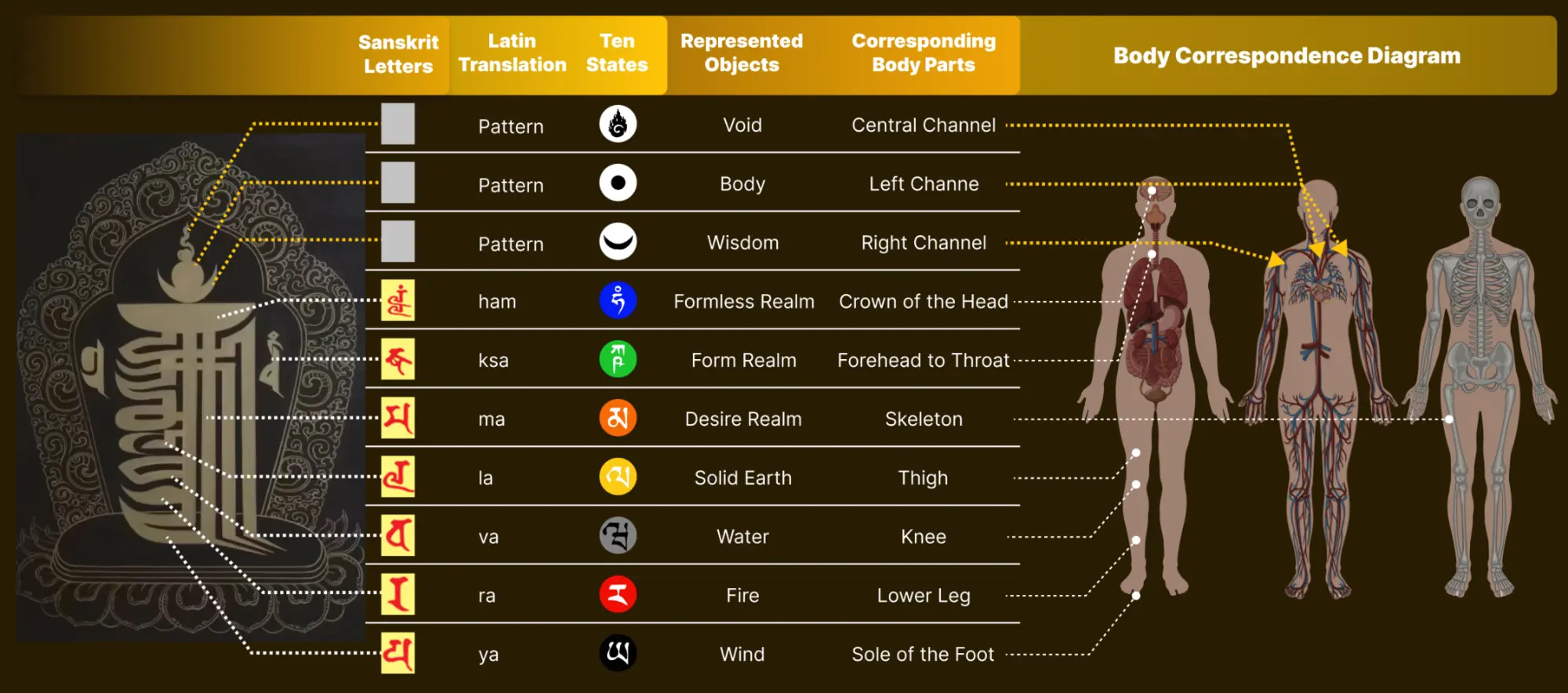
I extracted the Ten Stages of Freedom and connected their represented realms to specific parts of the human body, turning an abstract religious system into an embodied visual language.
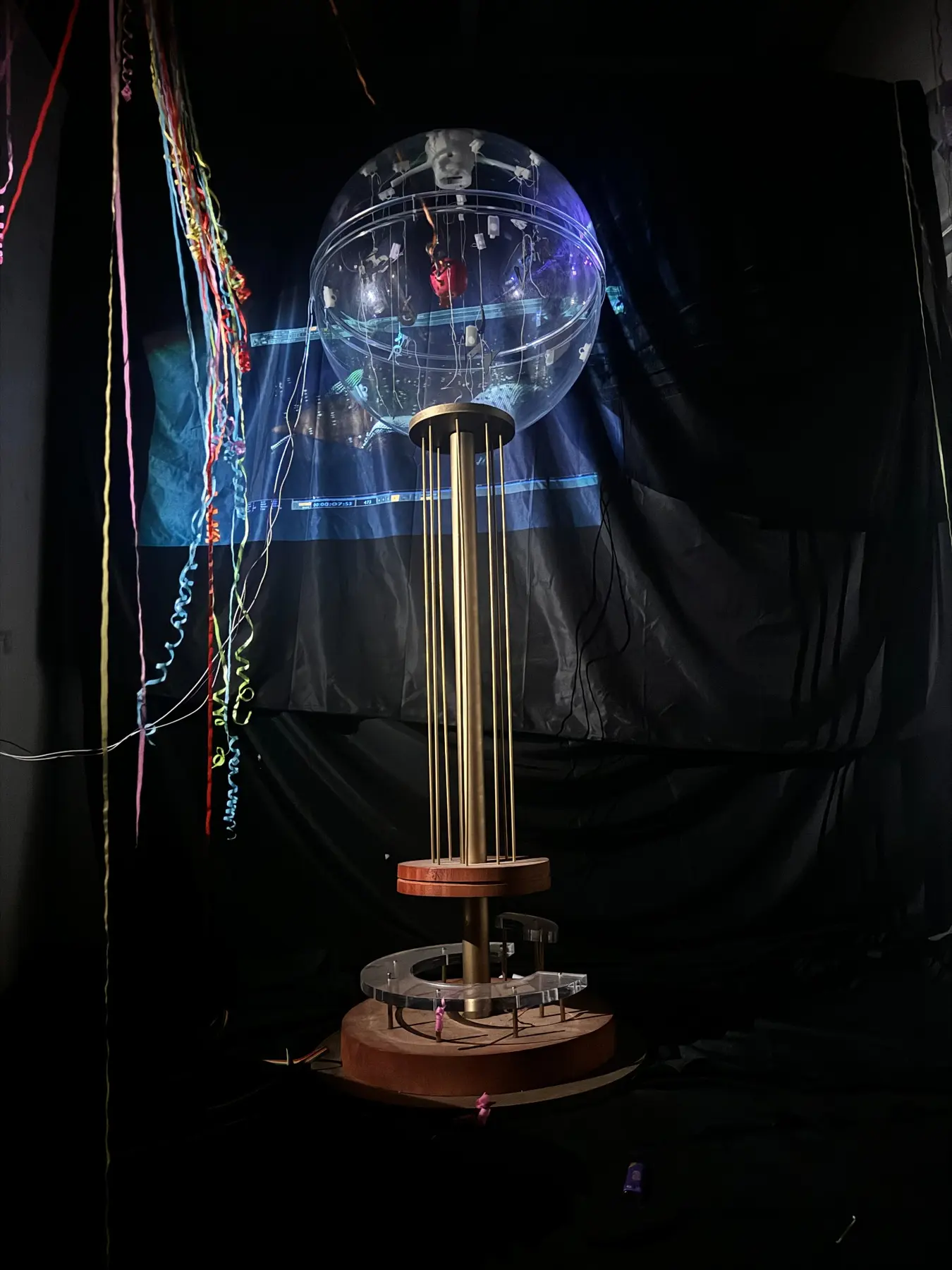
The final object combines the form of a Tibetan butter lamp, suspended symbolic blades and four levels of bowing. As the visitor lowers their body, the installation becomes increasingly active.
The installation is not a simulation of worship. It makes the viewer feel how belief can be carried, disciplined and internalised through the body.
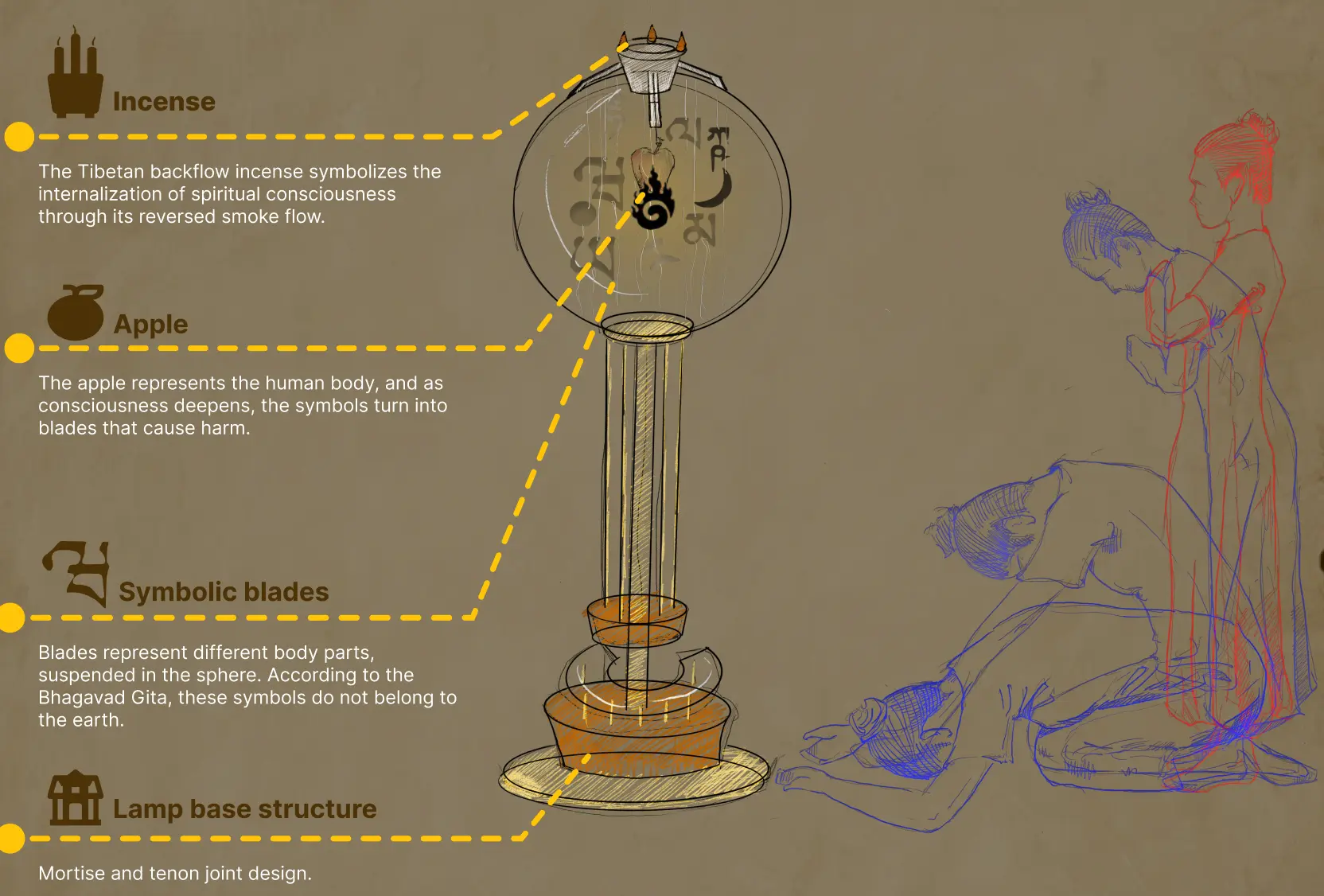
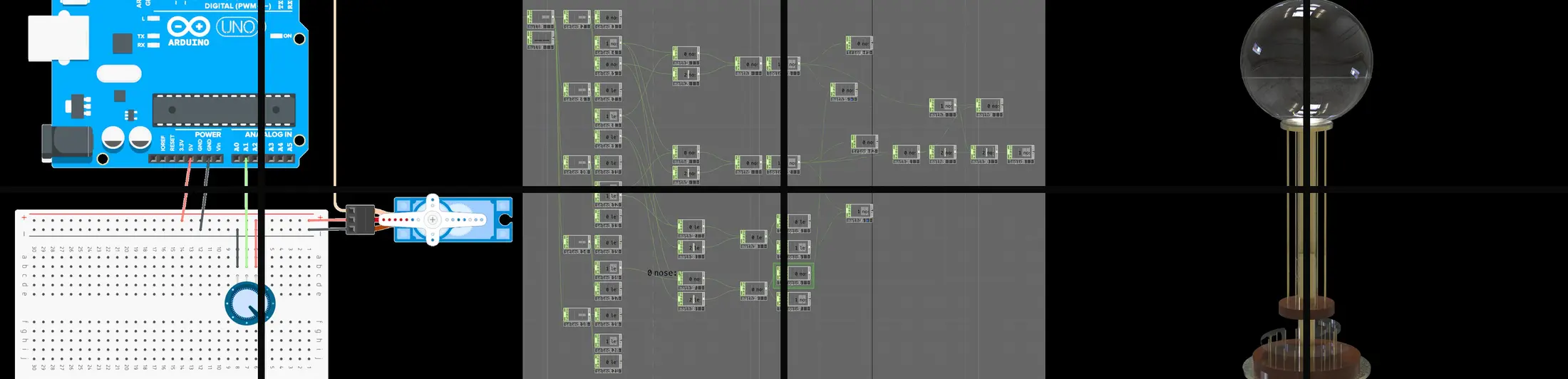
A responsive installation links four stages of bowing to increasing movement inside a spherical chamber. Religious symbols, the visitor’s posture and the physical apparatus form one argument about faith, suffering and coexistence.
FormatIndependent project · 2024
ContributionIndependent project. I conducted the field photography and cultural research, traced the relationship between religious symbols and the body, developed the installation concept and interaction, and used TouchDesigner and Arduino only as the technical layer that made the conceptual relationship perceptible.
MethodsSituated observation · Field photography · Religious-symbol research · Embodied mapping · Interactive installation · Arduino / TouchDesigner
StatusComplete case-study entry · further raw media can be added over time
The webpage foregrounds the project’s argument. The PDF preserves the full research, visual development and documentation.