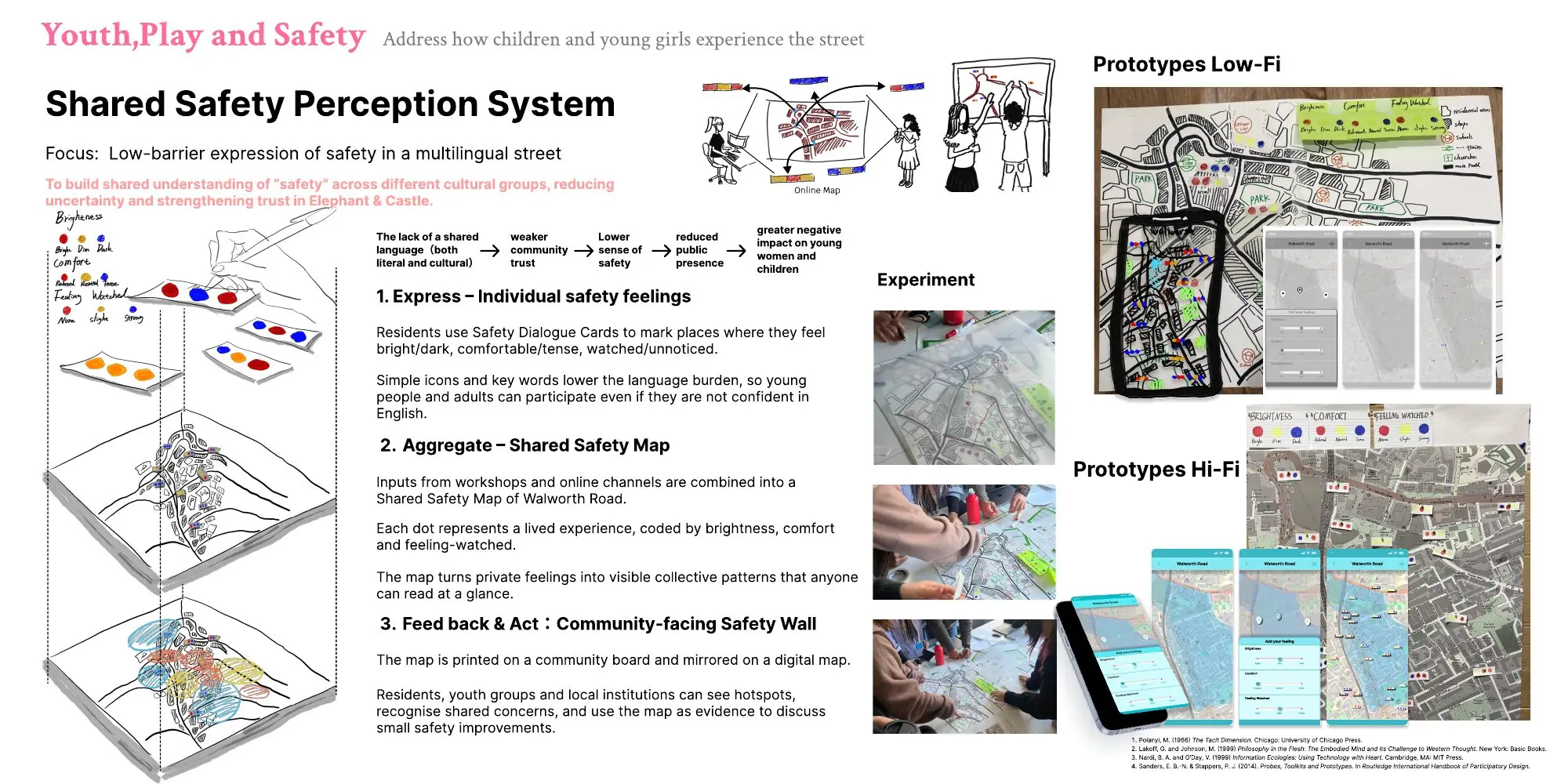
Shared Safety Perception System
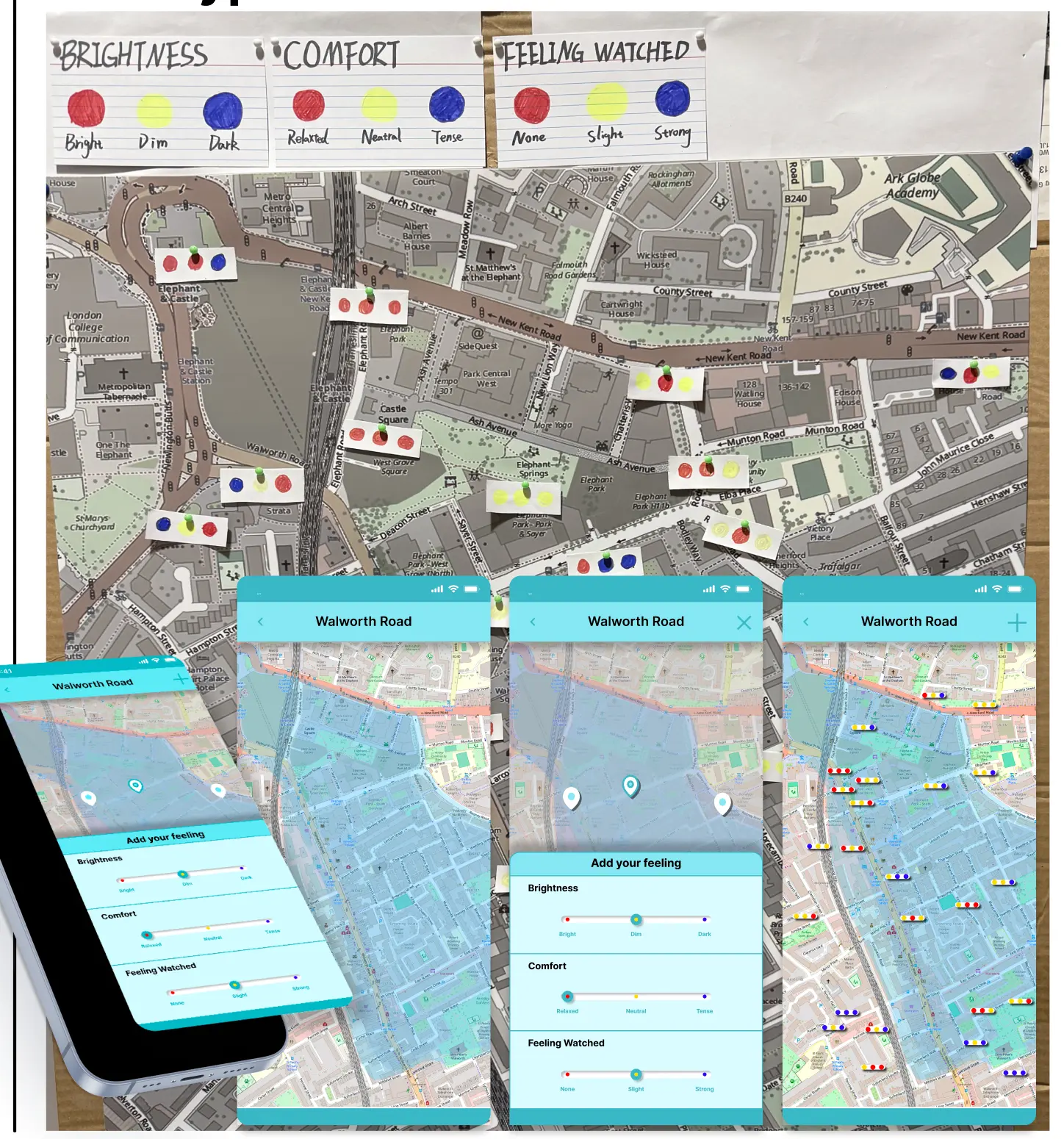
Combines a shared vocabulary, physical participation and a layered digital map.
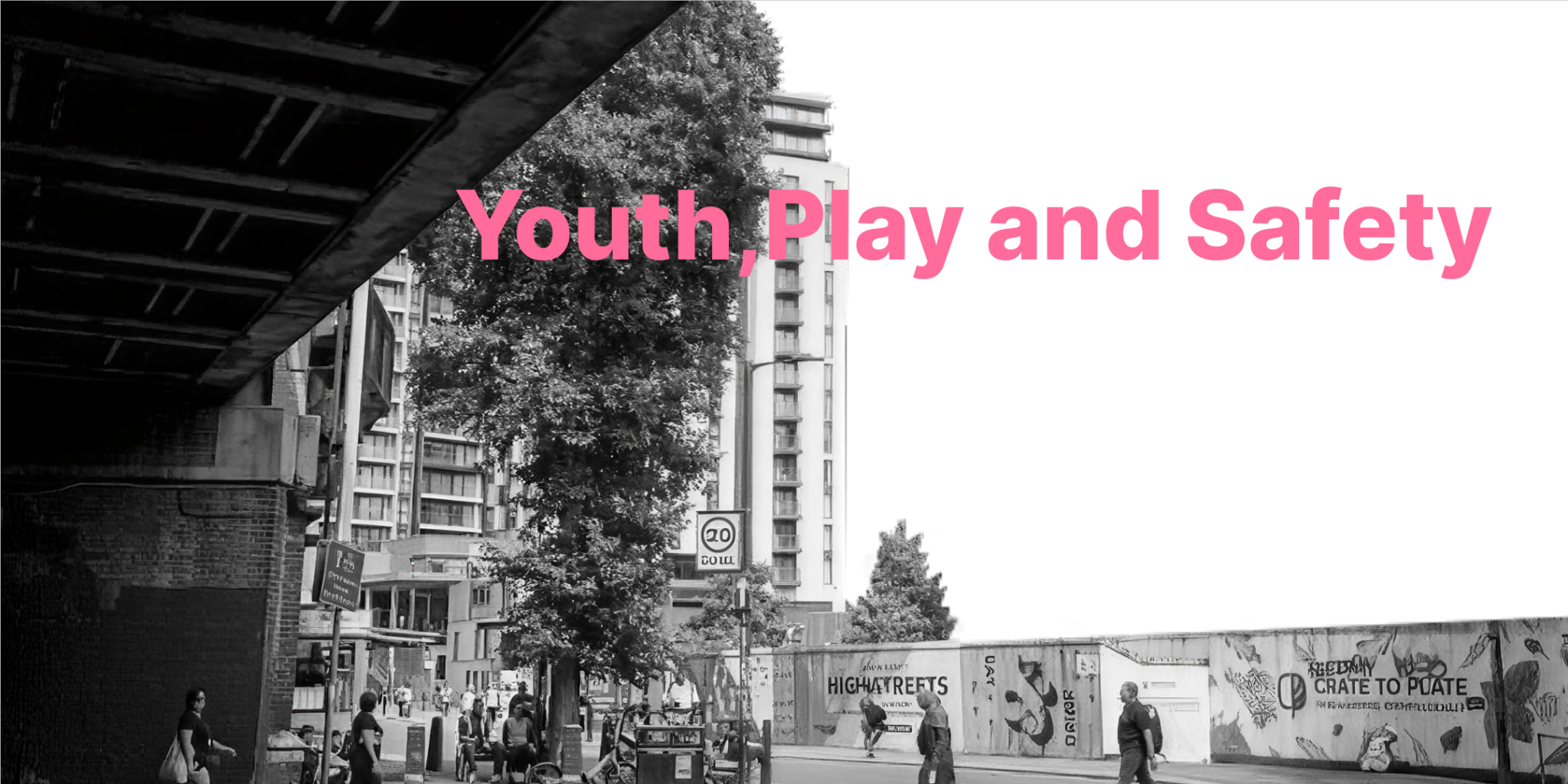
Youth, Play and Safety investigates public space around Elephant & Castle as a complex system. Instead of treating safety as a fixed condition determined only by authorities, the project maps how it is produced through redevelopment, youth presence, adult perception, routes, play, surveillance and local knowledge.
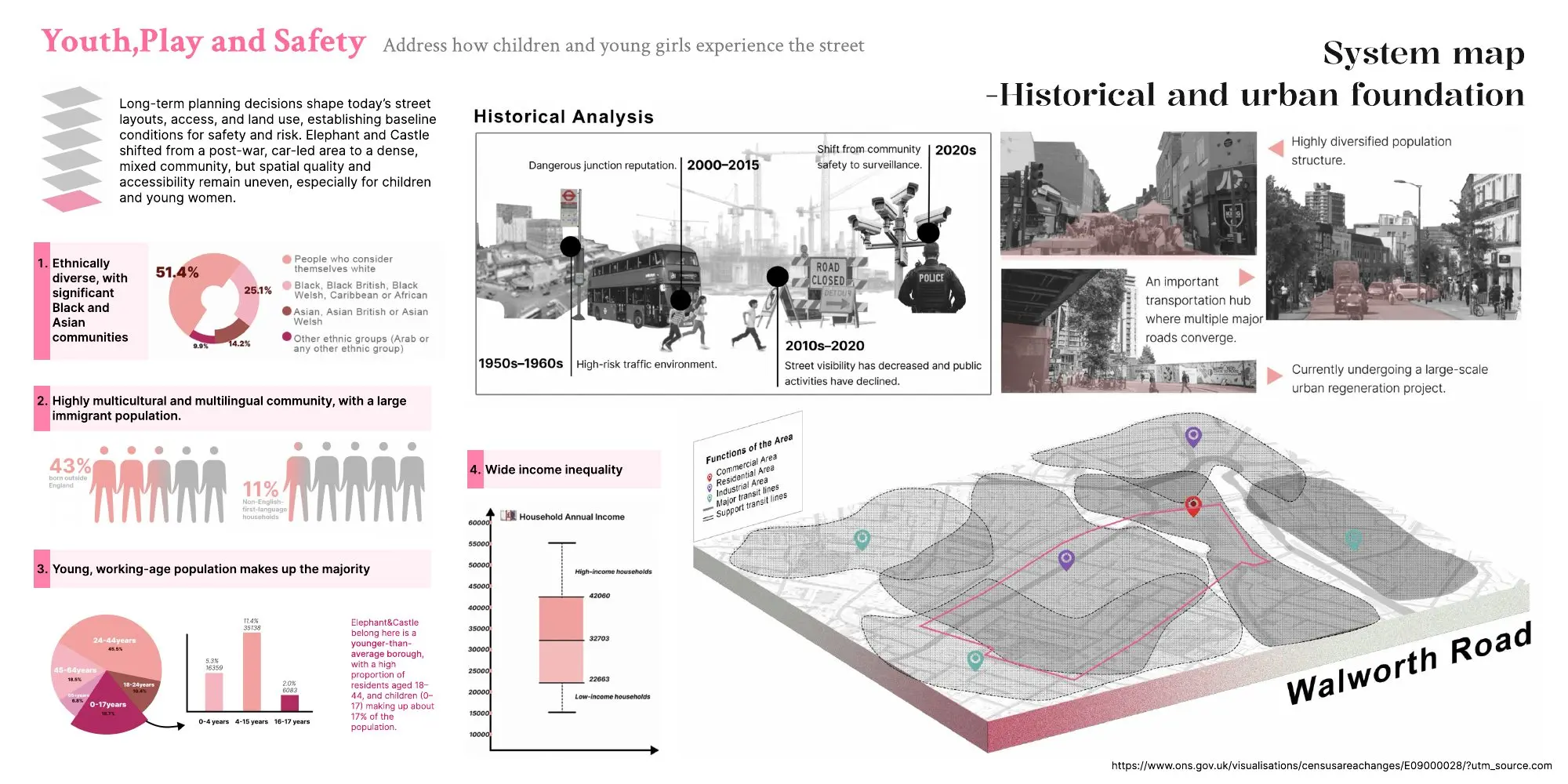
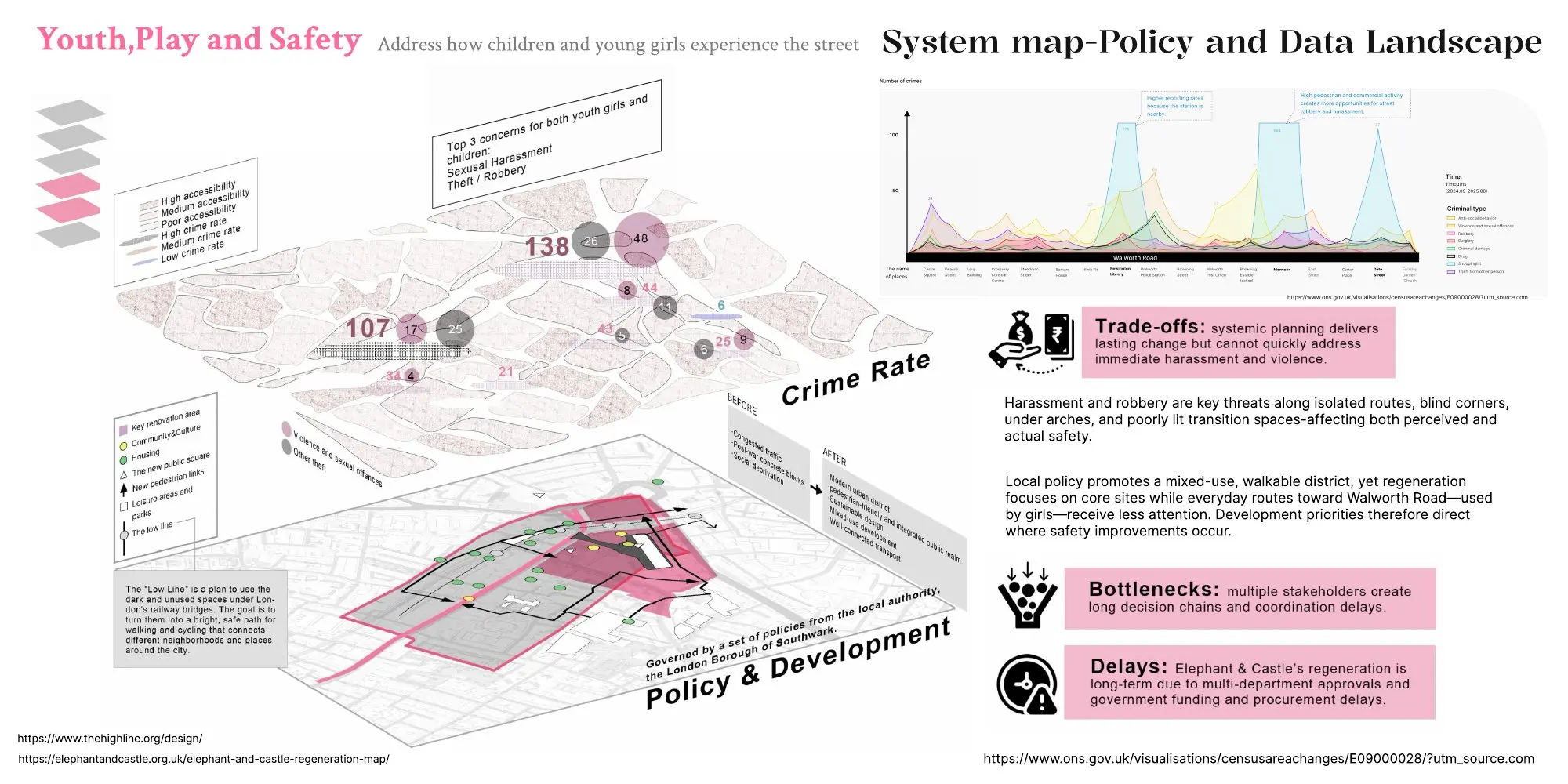
Historical change, regeneration, crime data and public narratives do not describe the same city. The research therefore treats safety as a contested relationship rather than a single measurable condition.
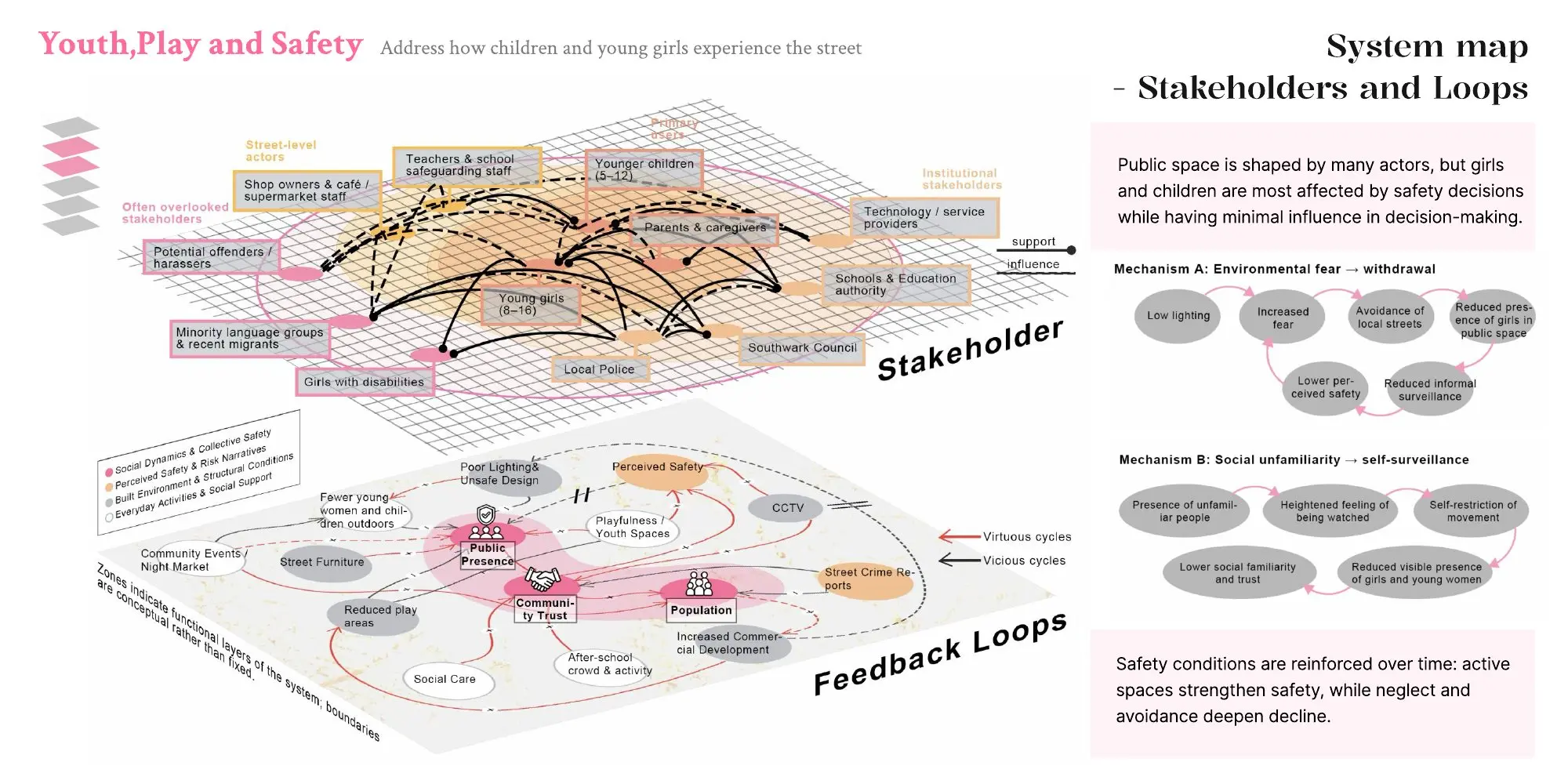
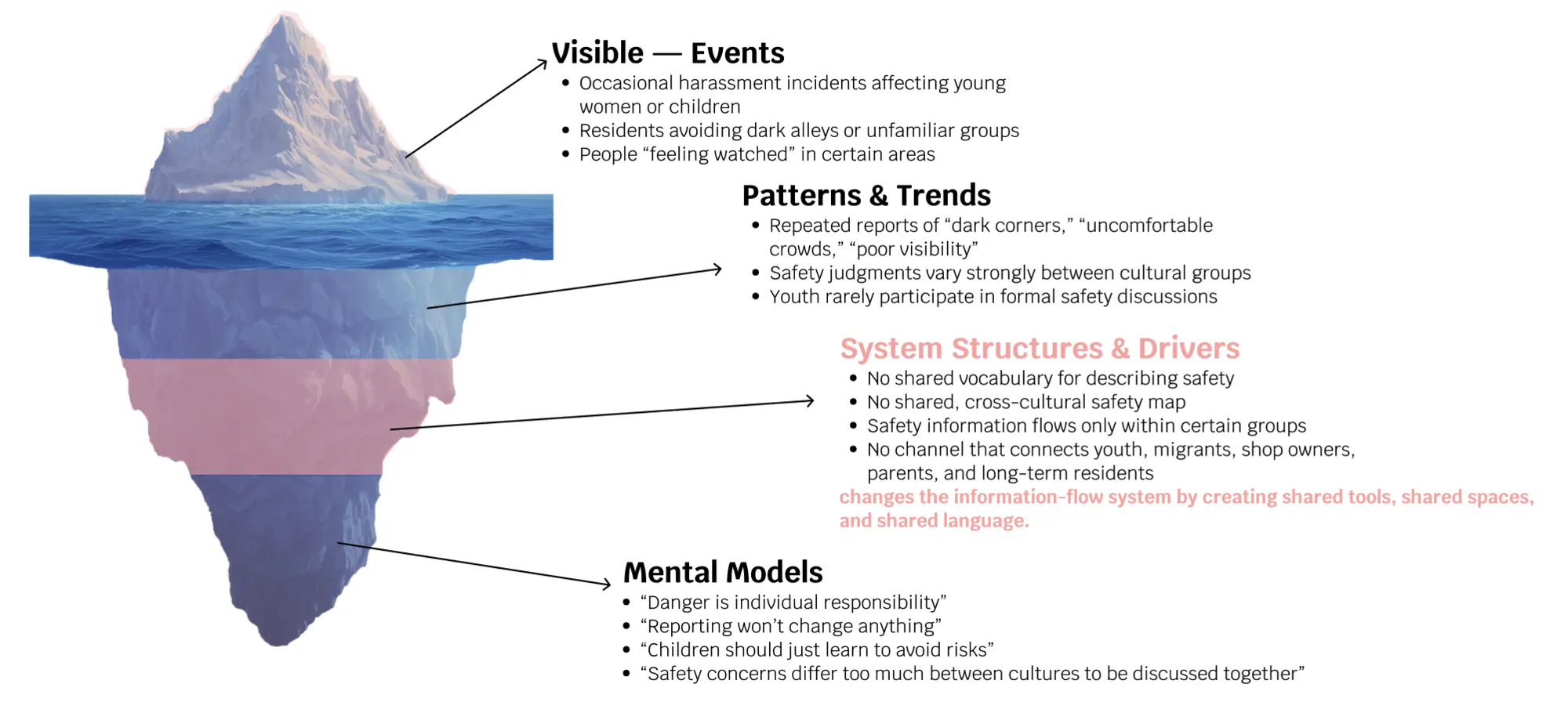
Young people are frequently discussed as a safety problem, but rarely included as producers of safety knowledge.
The leverage point is the fragmented flow of information between young people, residents, institutions and the systems that make decisions about public space.
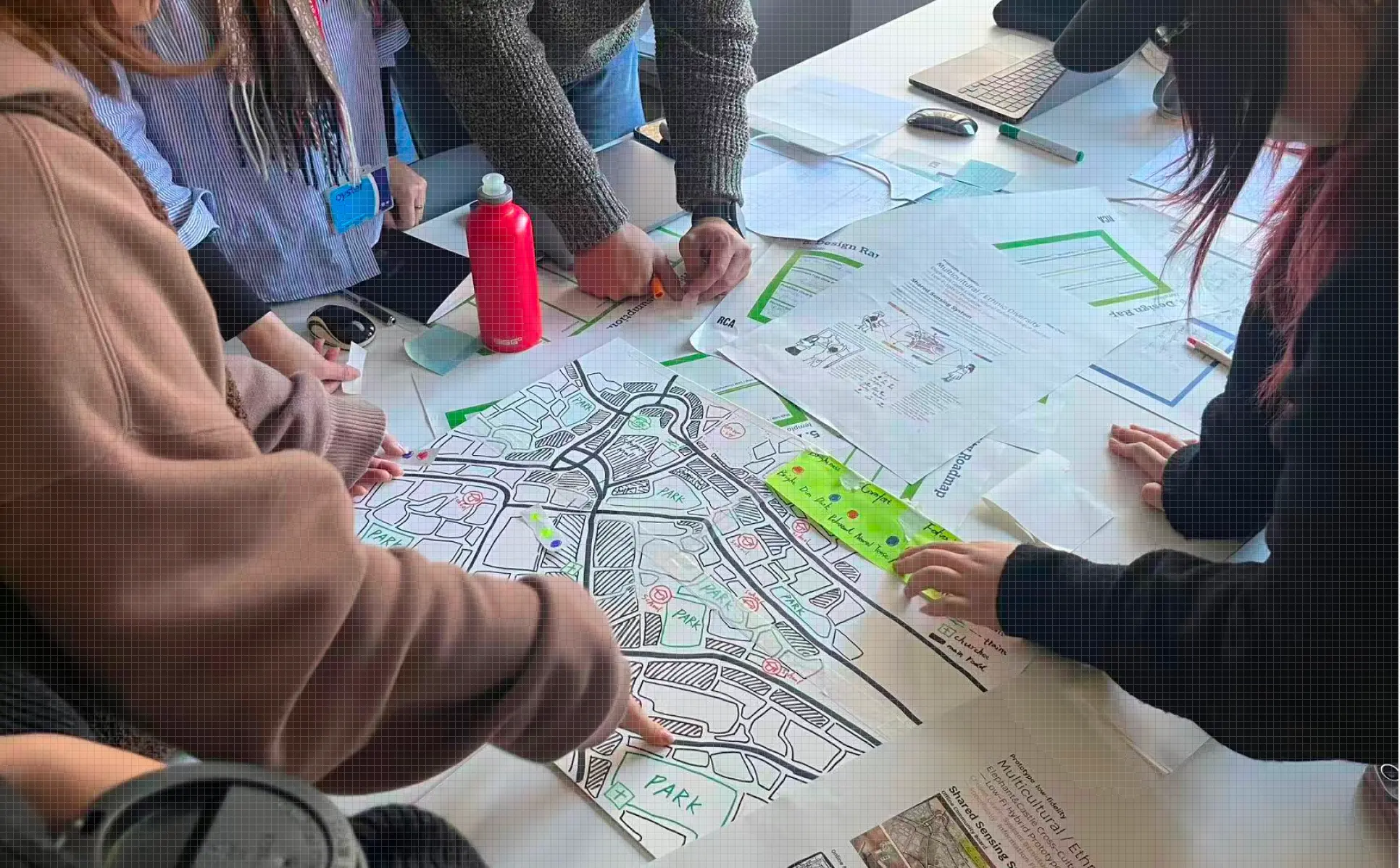
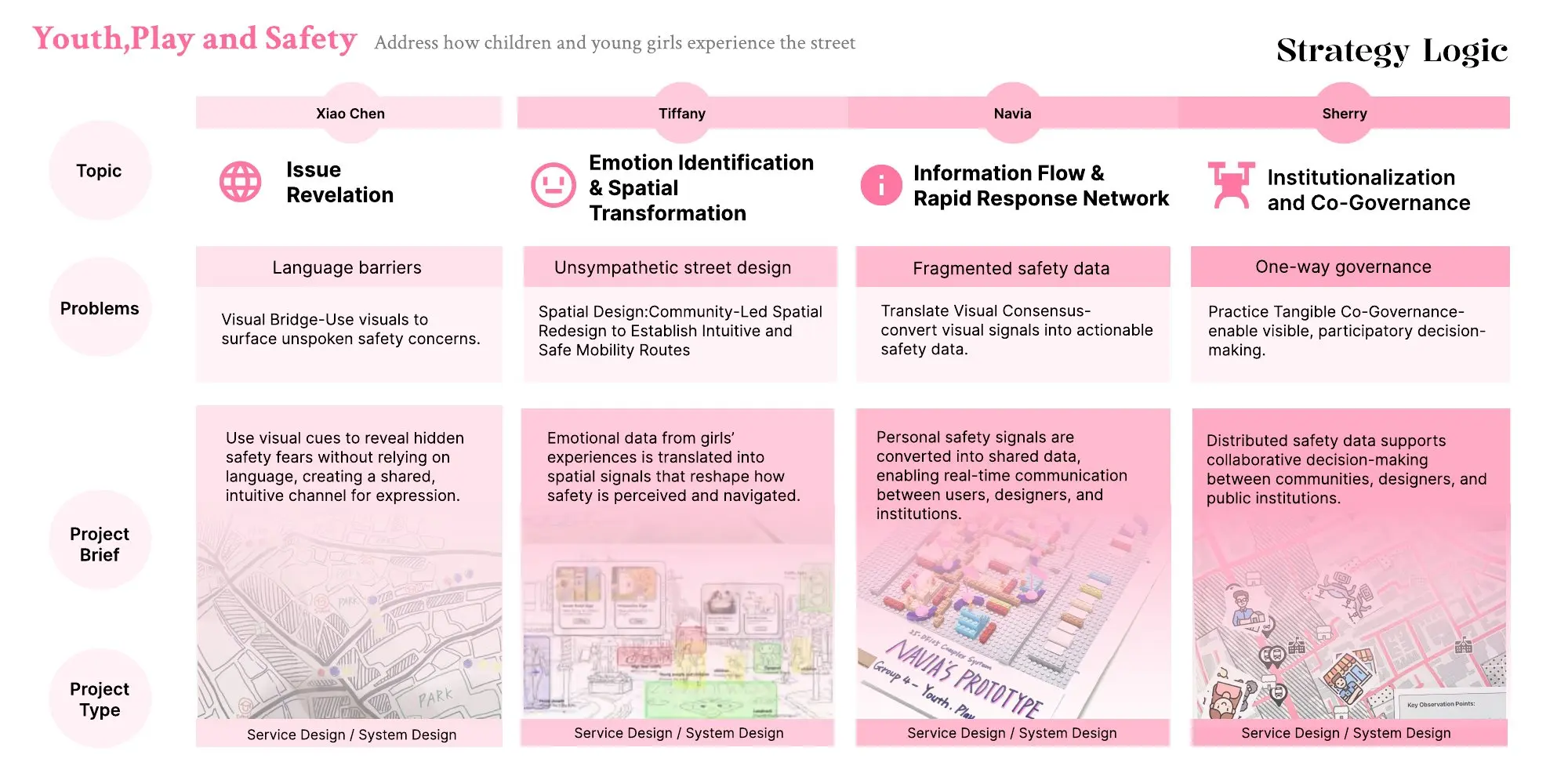
The strategy creates shared tools, shared spaces and shared language so that young people, residents and institutions can compare how the same streets are experienced differently.
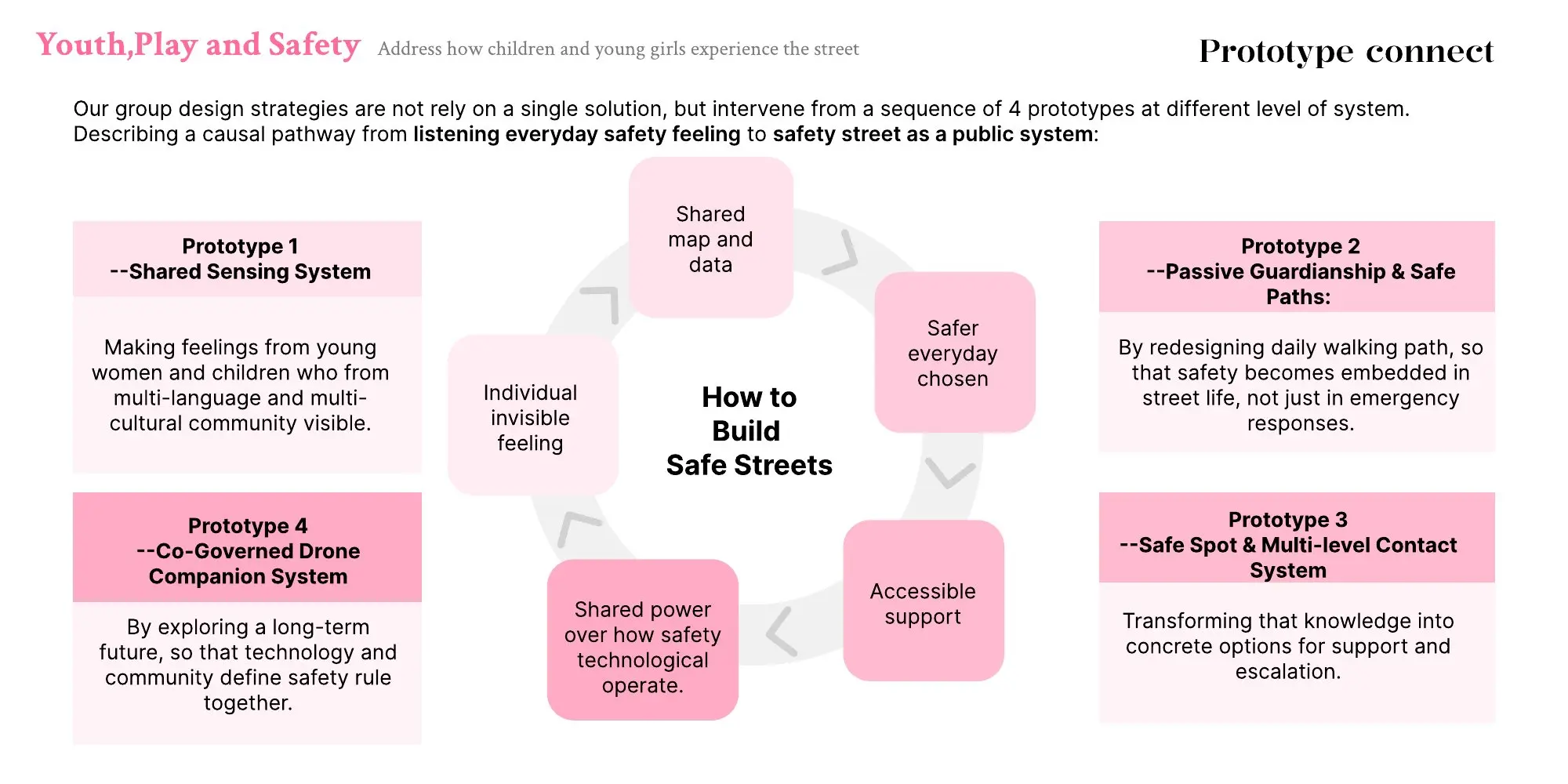
Combines a shared vocabulary, physical participation and a layered digital map.
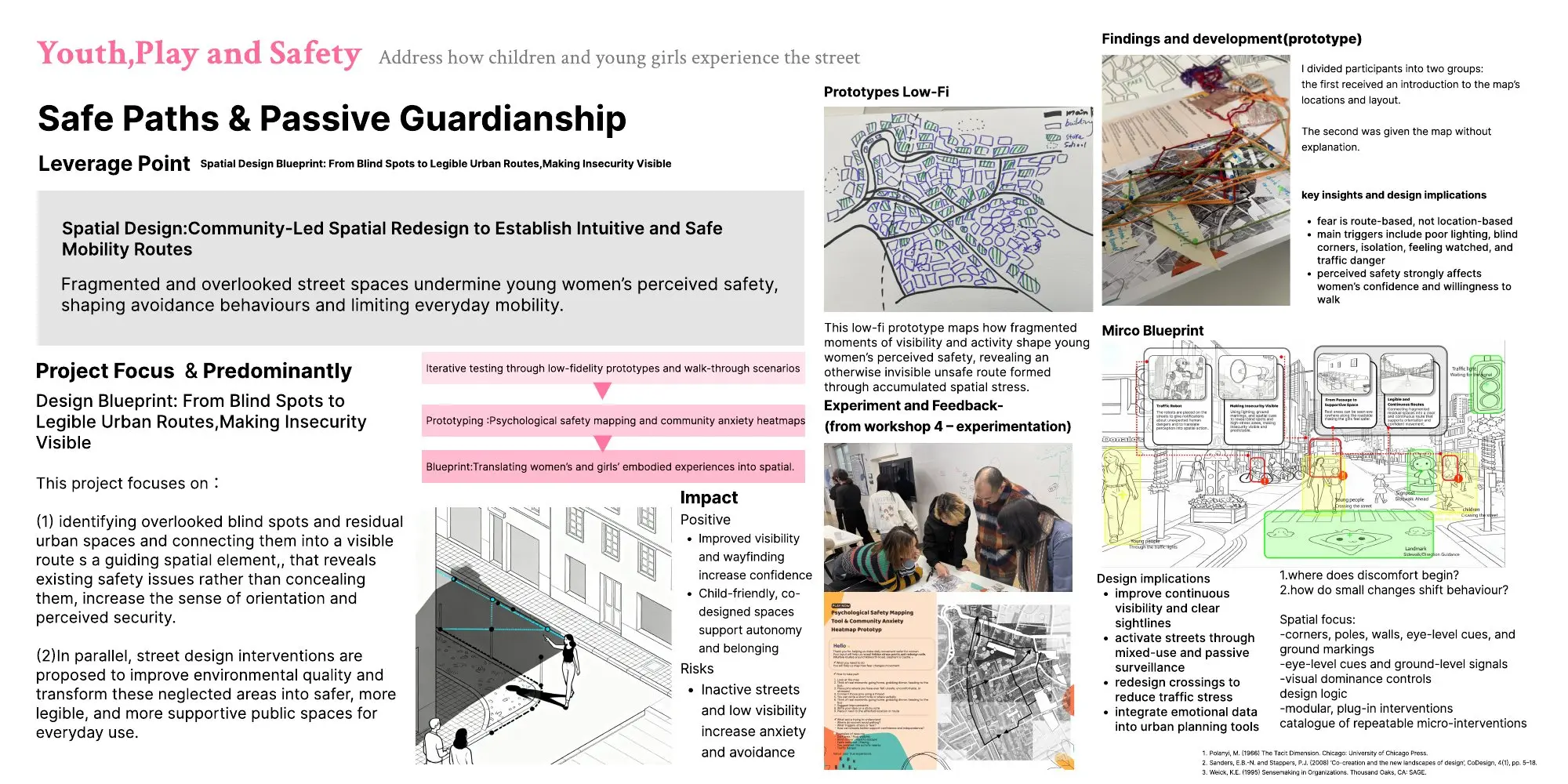
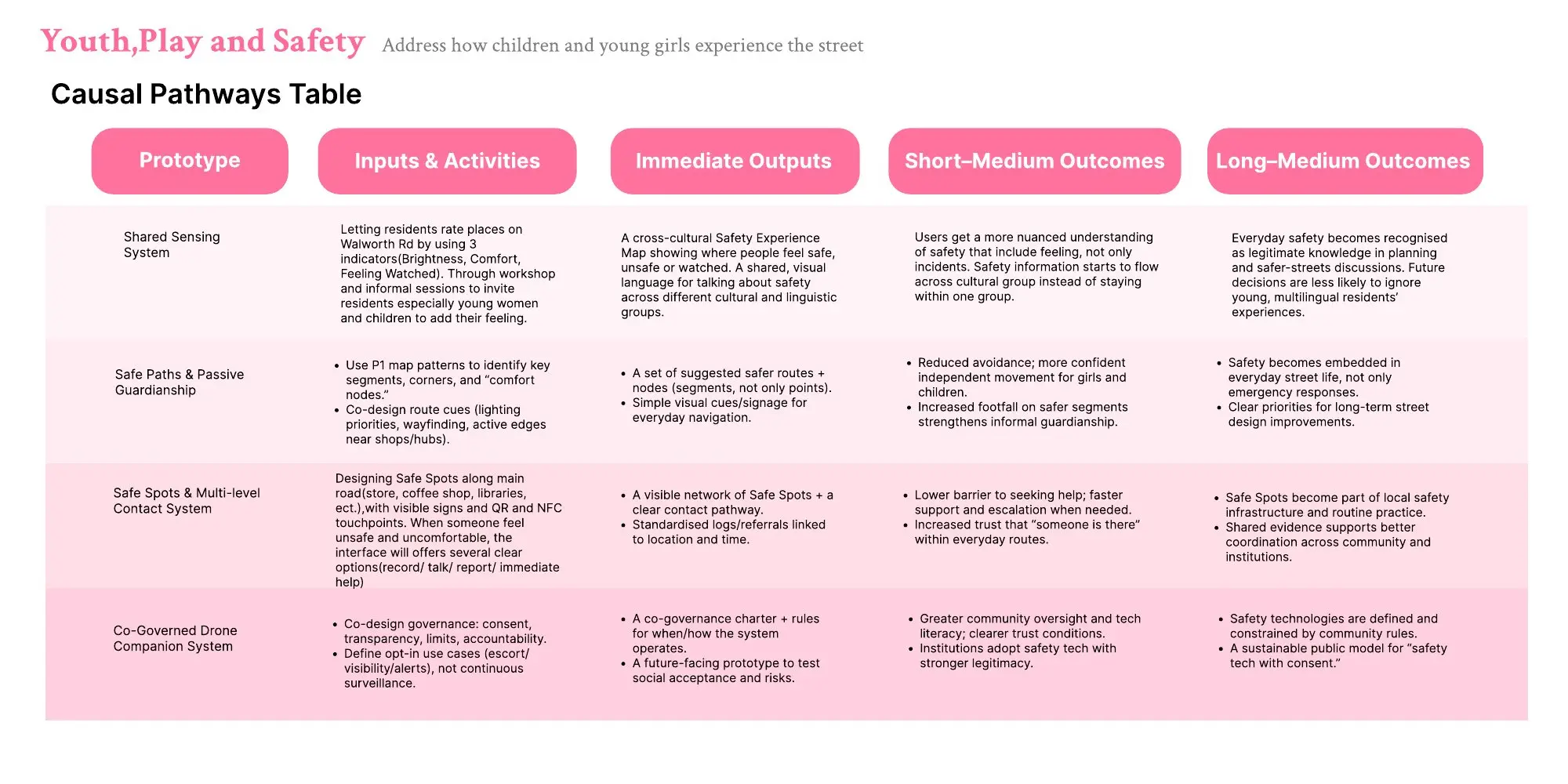
Tests how routes, visibility and distributed community presence can reinforce one another.
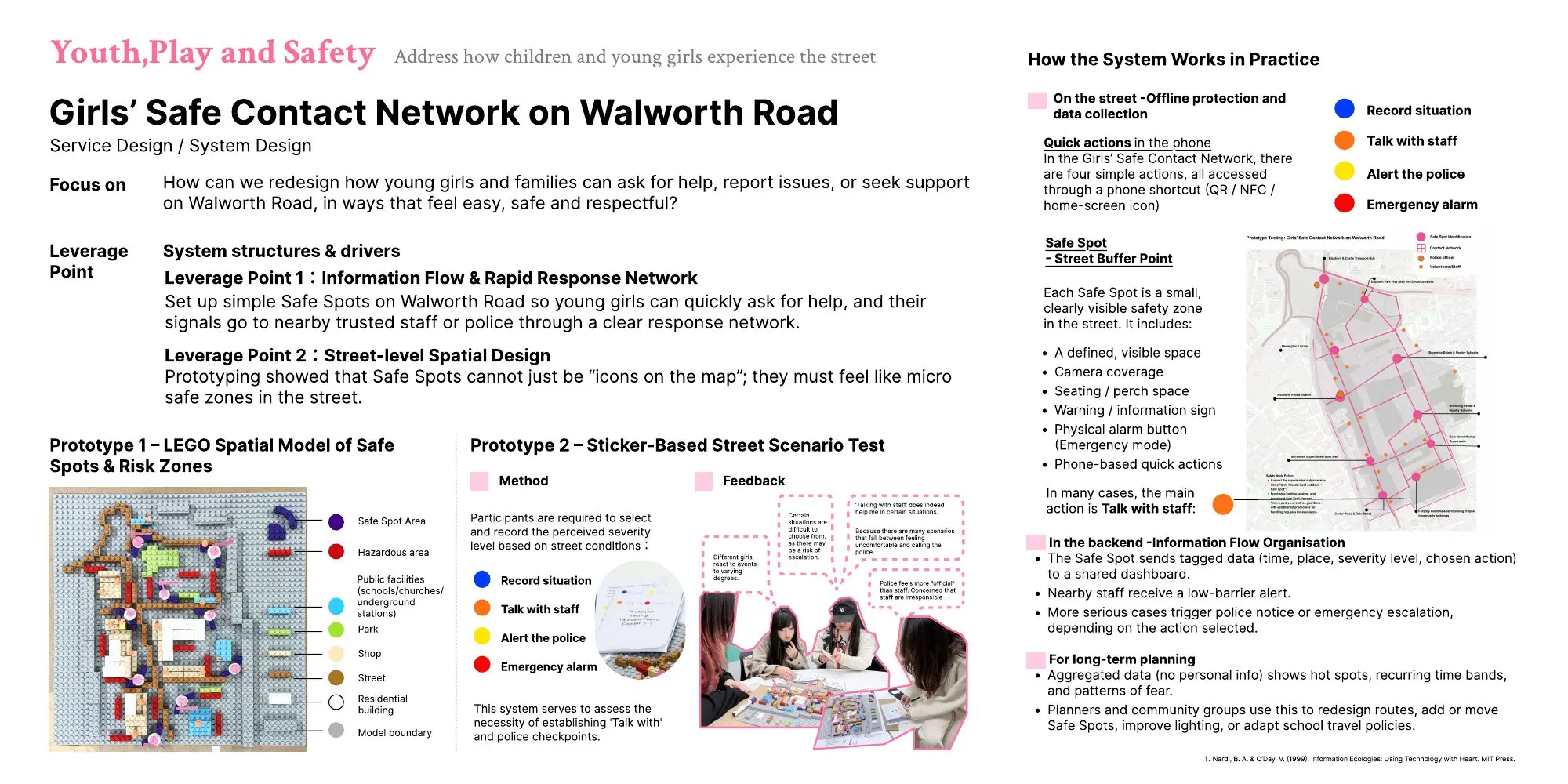
Develops situated support and trusted contact pathways with girls and young women.
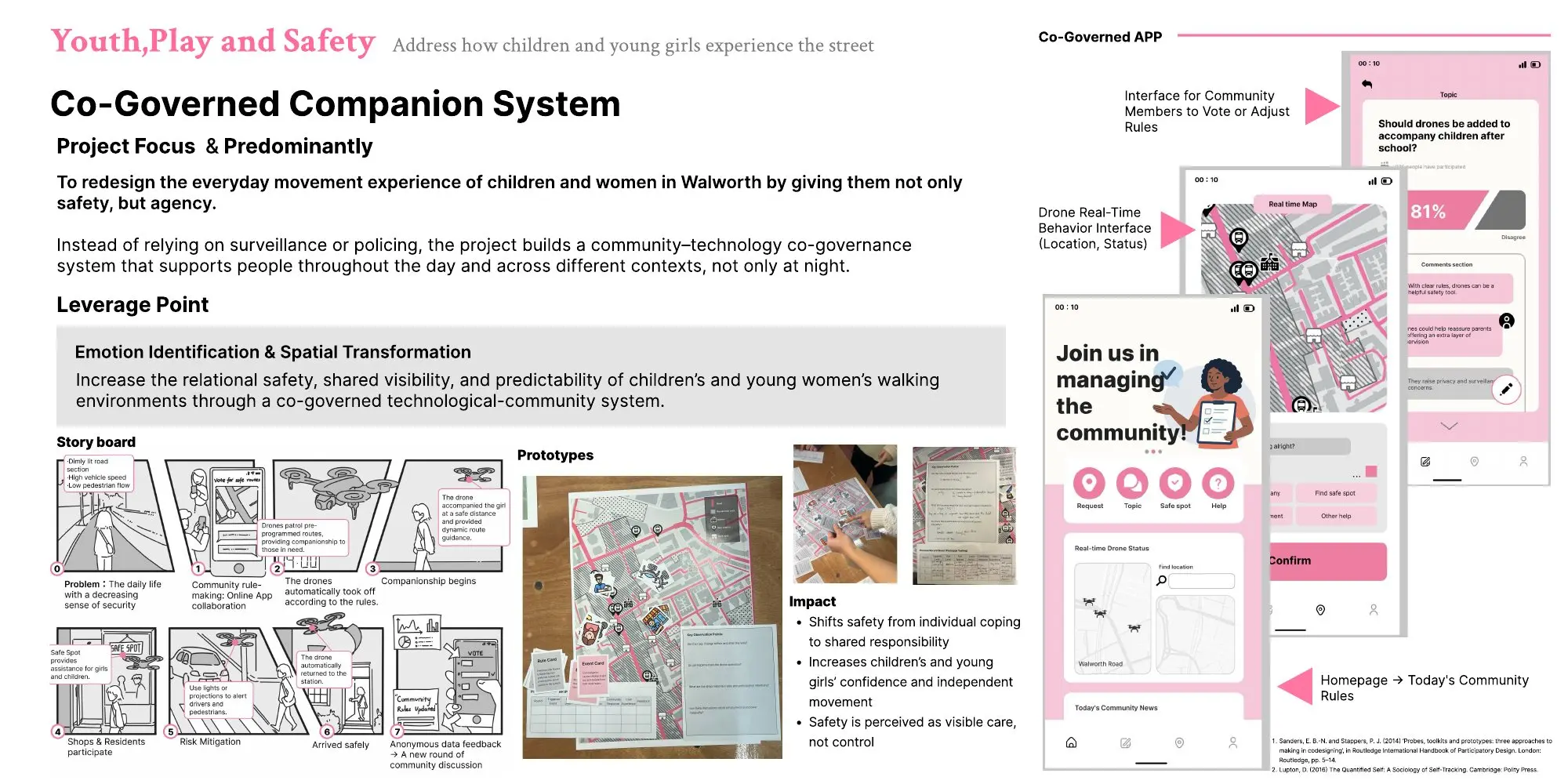
Connects resident participation with local institutions and longer-term decision-making.
Three common dimensions—brightness, comfort and feeling watched—allow different experiences to be placed on the same map without reducing them to one universal score.
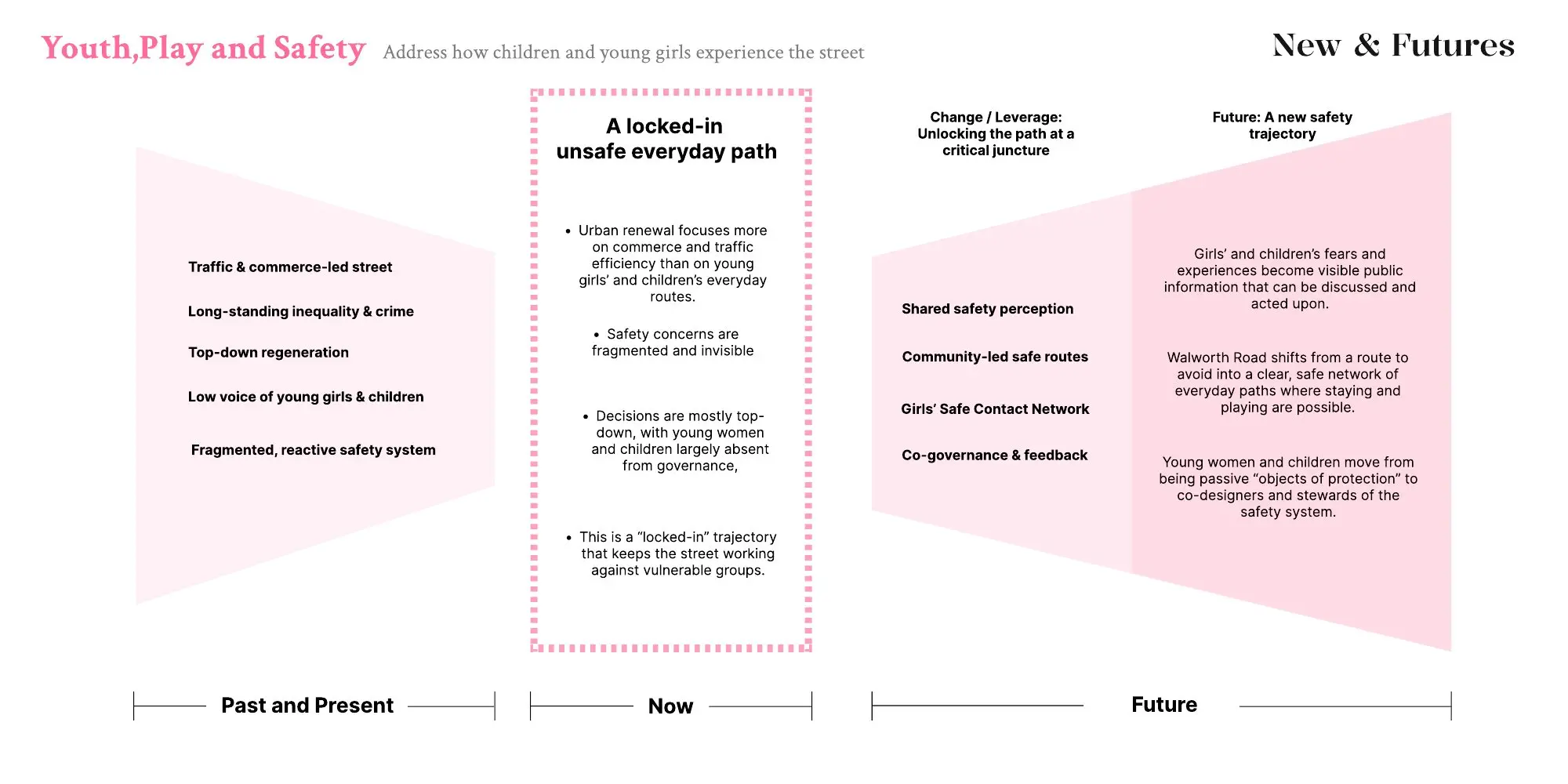
Safety is not a universal score. It is relational, temporal and contested—and young people must be recognised as contributors to local knowledge, not only as risks to manage.
The final strategy links a shared vocabulary, offline participation and a digital map into a co-produced system for revealing different experiences of the same place.
FormatCollaborative Design Futures project · 2025
ContributionCollaborative systems project. I contributed research, systems mapping, leverage-point development, design strategy and the Shared Safety Perception System prototype.
MethodsComplex systems · Field research · Stakeholder mapping · Leverage points · Co-design · Service prototyping
The webpage foregrounds the project’s argument. The PDF preserves the full research, visual development and documentation.