Facilitate second-hand and broken-jade trade, ensure secure transactions and support customisation?
So that people seeking personalised jade can access materials, services and verified makers within one process.
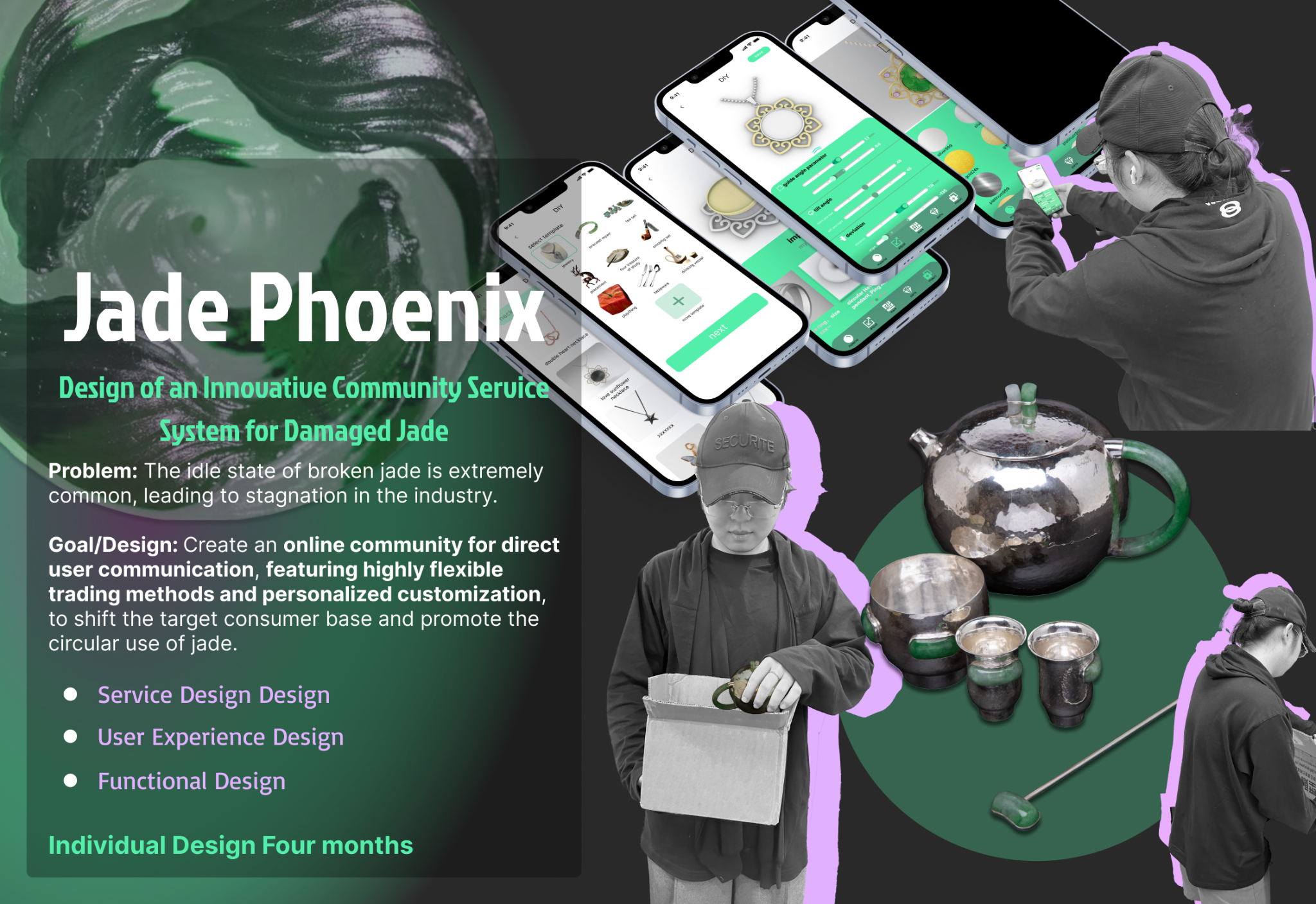
Jade Phoenix is a circular service platform connecting people who own unwanted jade with consumers, independent designers and local craftspeople. It supports resale, verified remaking and continued recirculation—turning an opaque second-hand market into a traceable community process.
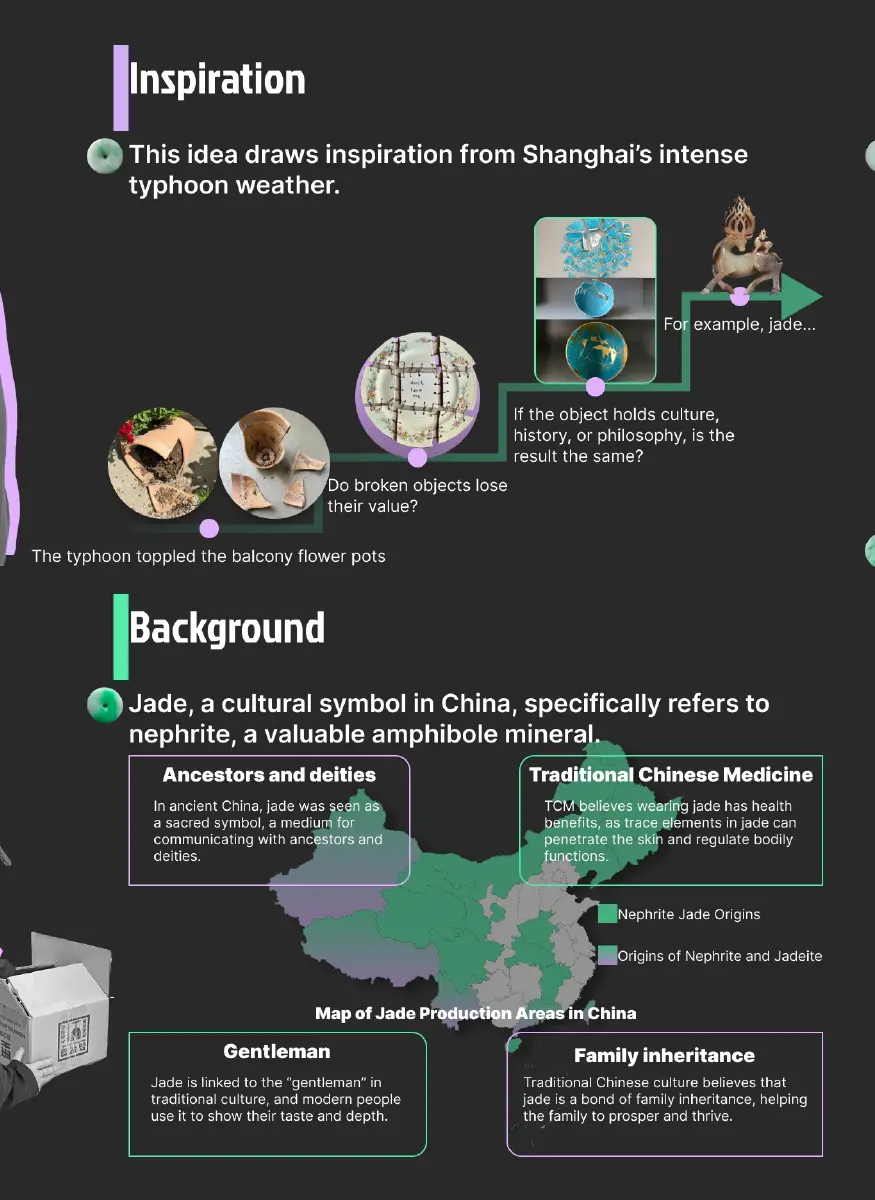
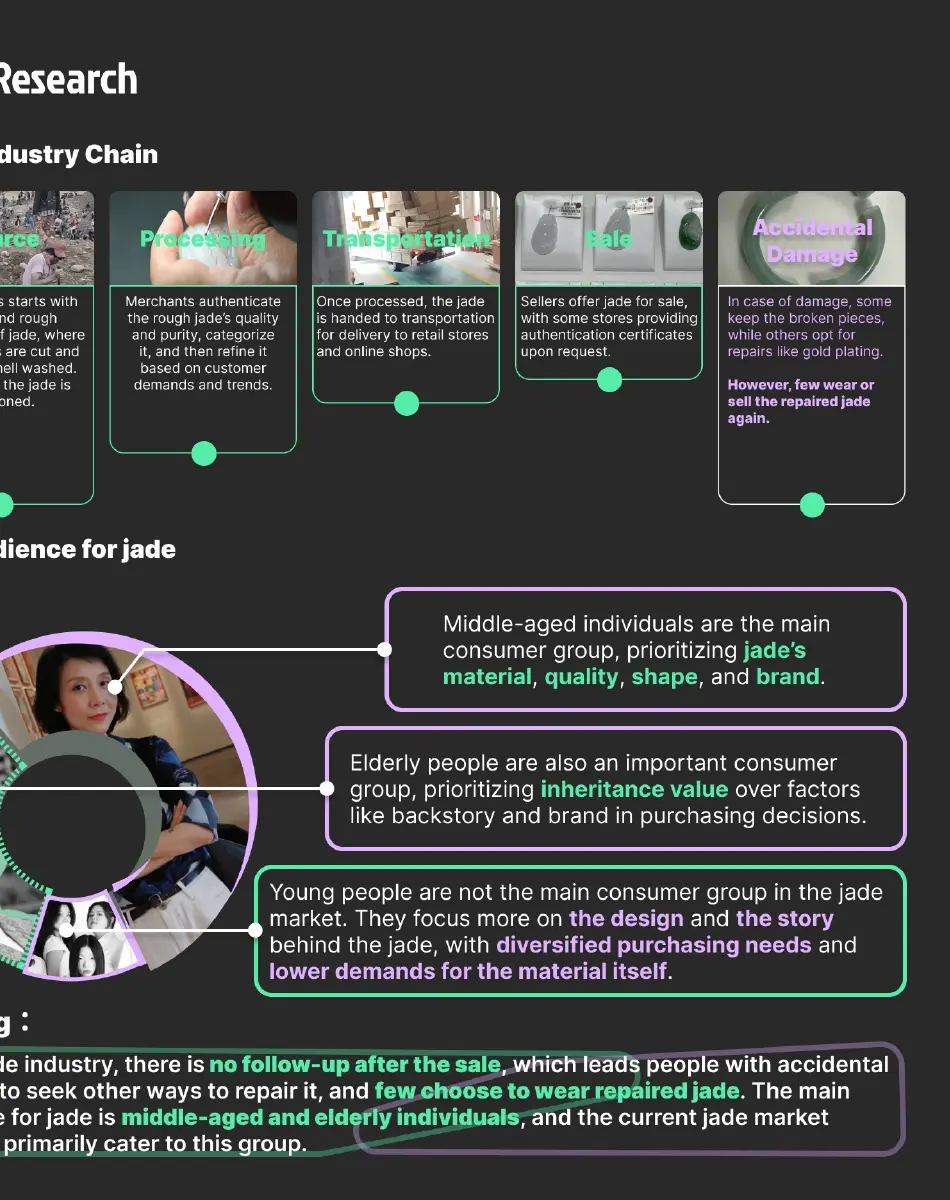
The opportunity is not simply to resell damaged objects. It is to preserve provenance, enable redesign and make every handover visible enough for owners, buyers and makers to trust the process.
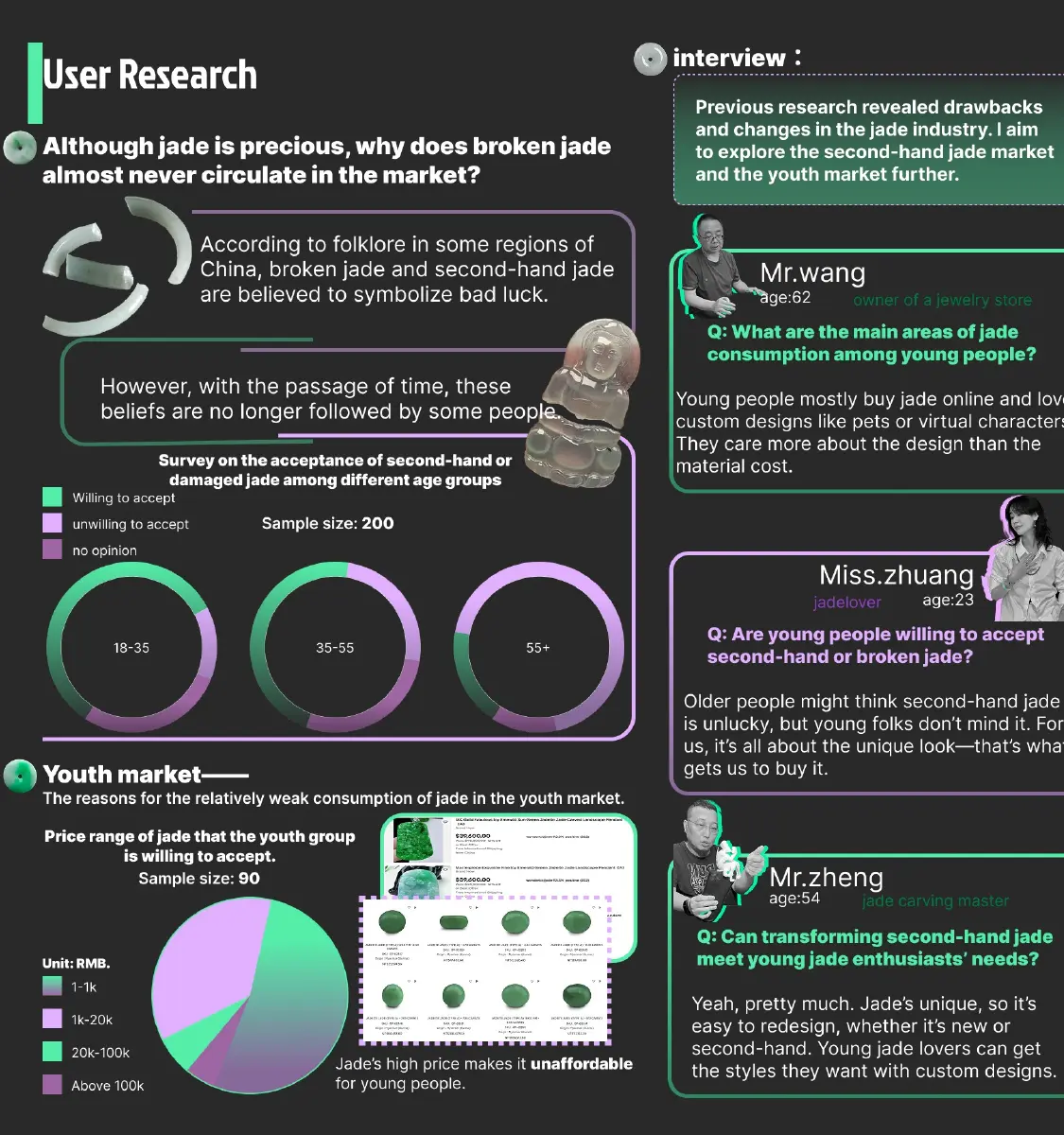
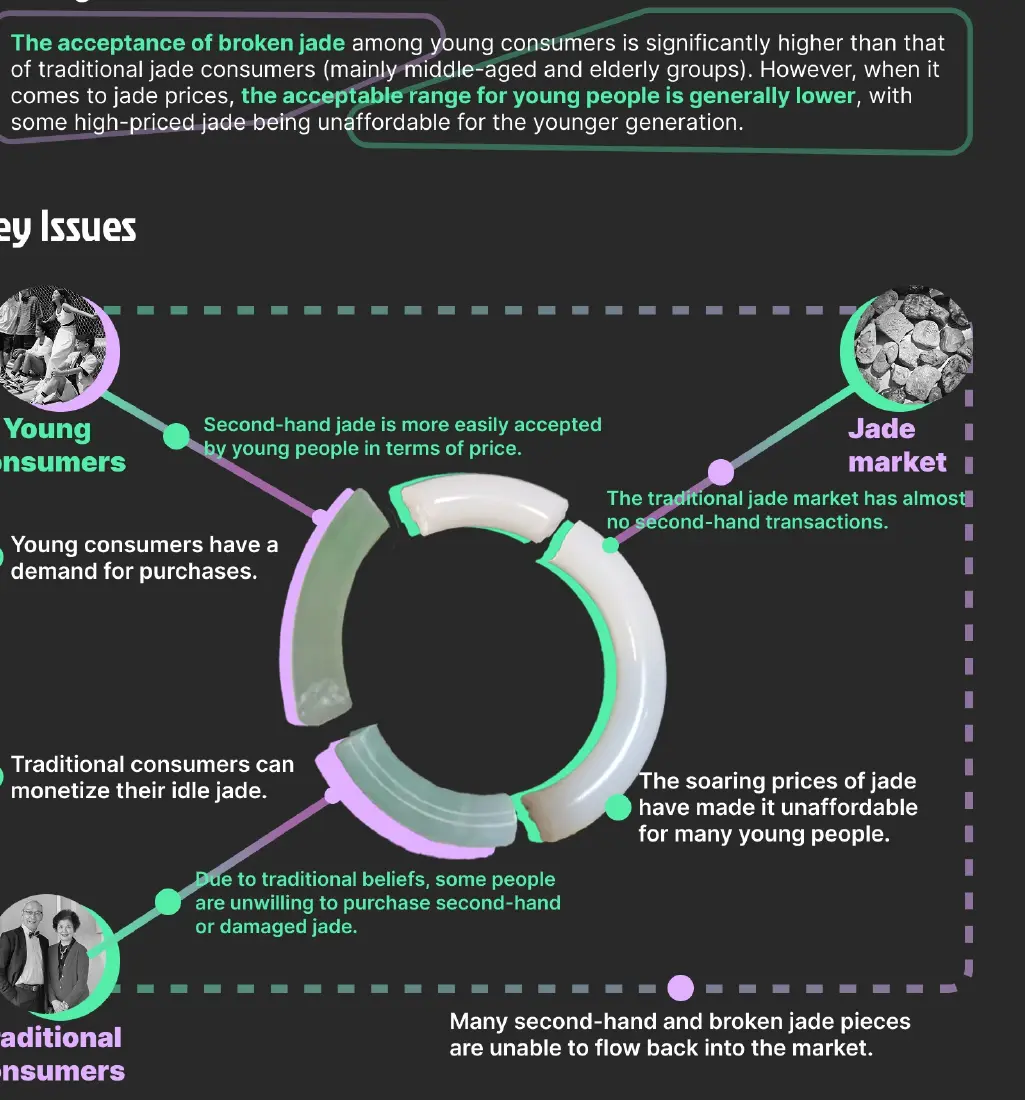
People can accept repaired or second-hand jade when they understand its origin, control its redesign and trust the maker handling it.
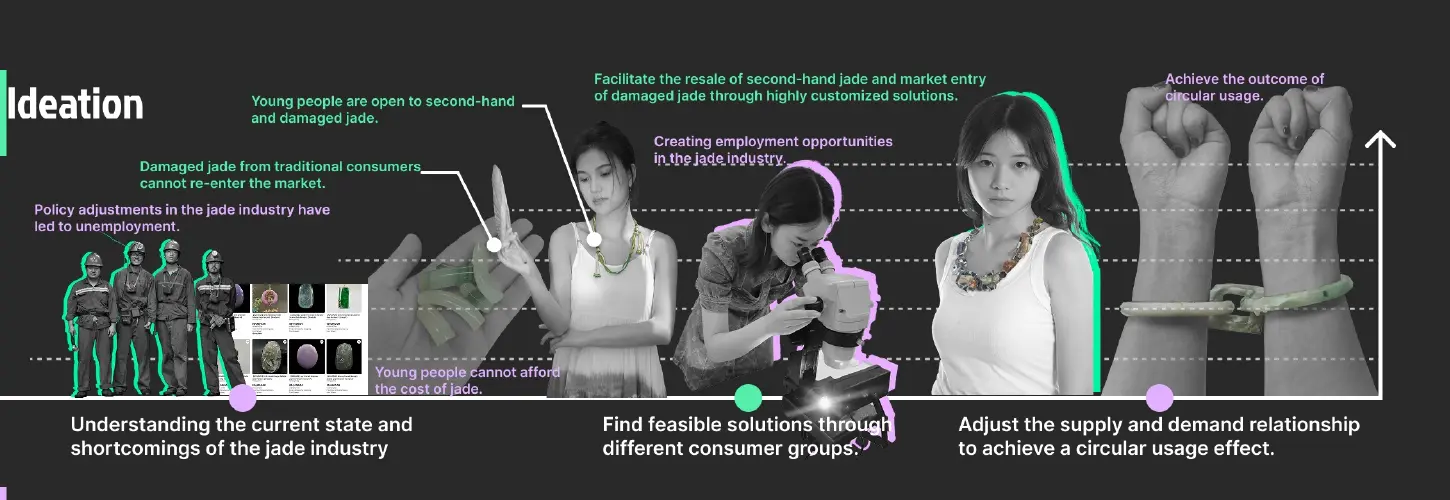
So that people seeking personalised jade can access materials, services and verified makers within one process.
So that demand, design capability and craft capacity can meet more directly.
The platform shifts jade from a one-time purchase into a traceable cycle of exchange, redesign, making and recirculation.
Lists idle or damaged jade with its history and condition.
Selects material and defines a personalised commission.
Develops a proposal around the material and its story.
Receives, verifies and remakes the object locally.
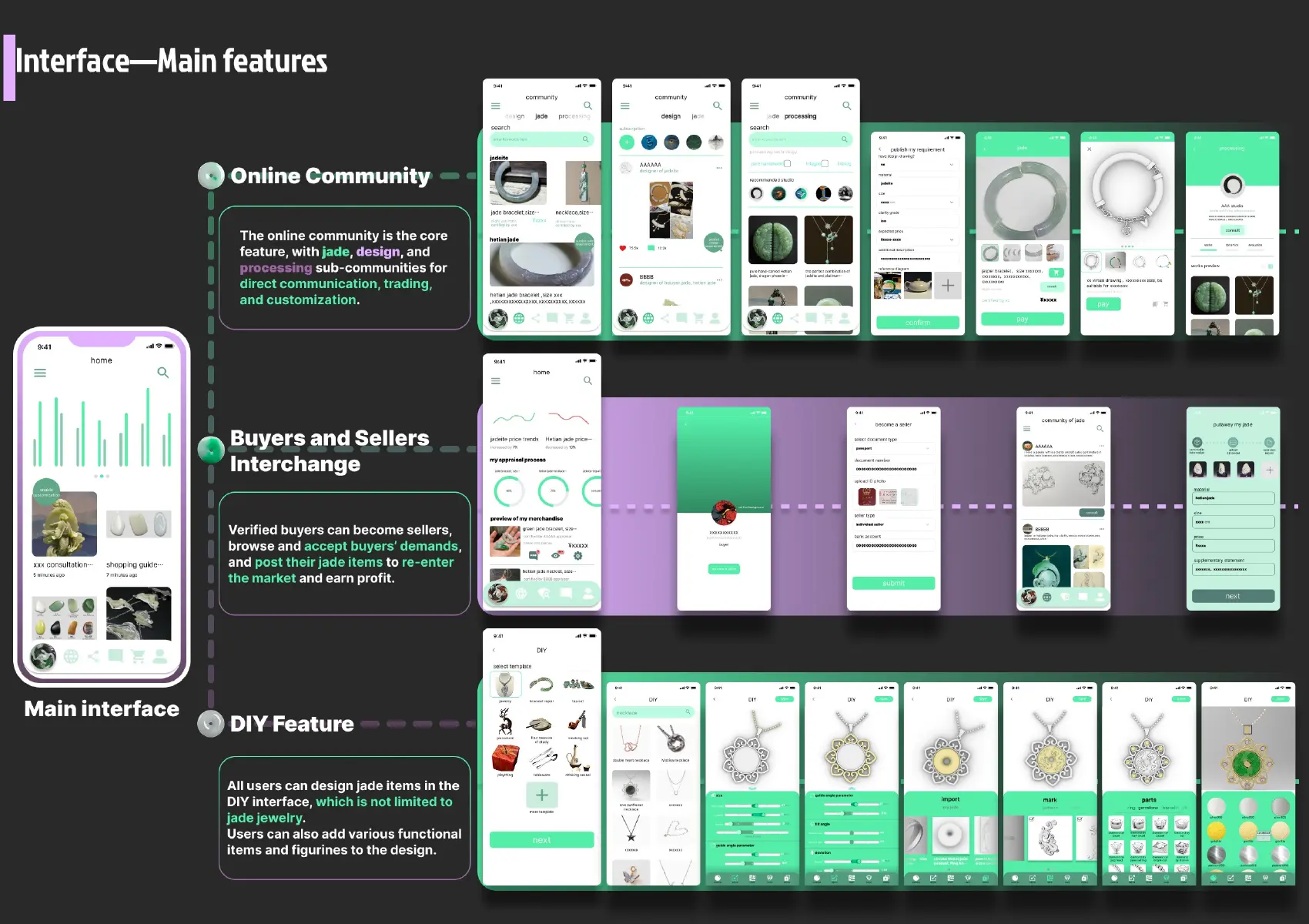
Owners, designers and makers exchange references, advice and commission opportunities.
Verified buyers and sellers circulate existing jade with clearer provenance and pricing.
Users combine materials, forms and functional components before commissioning a maker.
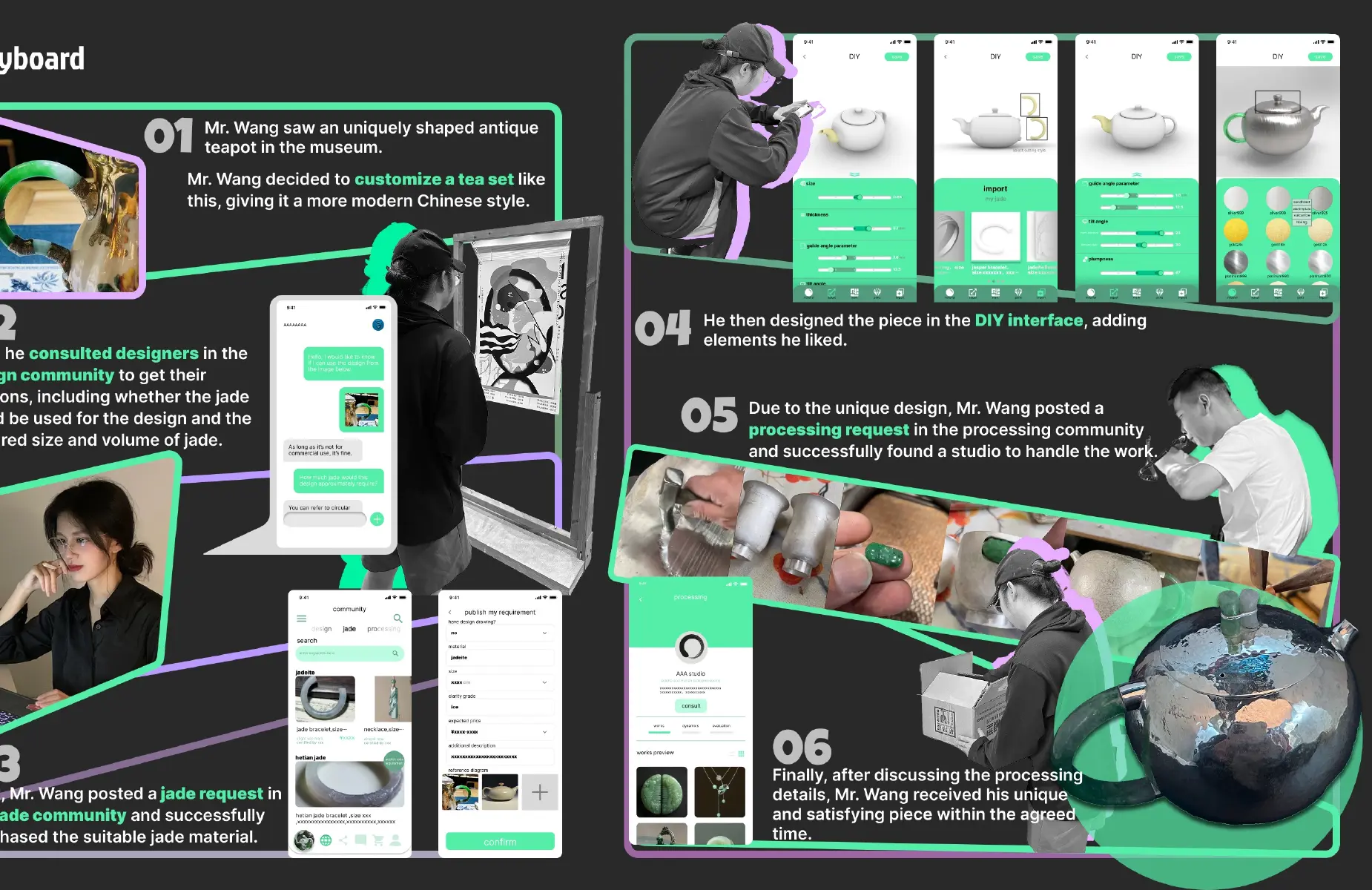
Circularity depends on social infrastructure as much as material reuse: provenance, local relationships and transparent handovers make remaking credible.
The final proposal combines a circular business model, stakeholder ecosystem, service blueprint and multi-sided digital prototype for the full jade-remaking journey.
FormatIndependent service design project · 2024
ContributionIndependent project. I conducted market and user research, mapped the stakeholder system, developed the service and business model, and designed the multi-sided UI/UX experience.
MethodsService design · Stakeholder mapping · User research · Circular economy · Platform strategy · UI/UX
The webpage foregrounds the project’s argument. The PDF preserves the full research, visual development and documentation.